SaaS Welcome Email Sequences: Templates + Best Practices
A SaaS welcome email sequence is a series of automated emails sent to new users in the first 7–14 days after signup, designed to help them reach their "aha moment" and convert from free trial to paid customer. It is the highest-leverage email asset a SaaS company can build — because every new user gets it, it runs automatically, and it directly affects trial-to-paid conversion.
Quick Answer: A strong SaaS welcome sequence has 3–6 emails sent over 7–14 days. It focuses on activating users — helping them accomplish something meaningful in the product — rather than selling features. The sequence that gets users to their first win converts at dramatically higher rates than one that dumps a feature list in their inbox.
Why Most SaaS Welcome Emails Fail
The most common mistake: treating the welcome sequence as a product brochure.
What most SaaS teams send:
- Email 1: "Welcome to [Product]! Here are all our features."
- Email 2: "Did you know we also have [Feature]?"
- Email 3: "Your trial ends in 3 days. Upgrade now."
Why this doesn't work: New users don't care about features. They care about outcomes. They signed up because they have a problem. Your welcome sequence needs to help them solve that problem inside your product — fast. The moment a user achieves something meaningful with your tool, they convert from evaluator to believer.
The Framework: Activation-First Welcome Sequences
The best SaaS welcome sequences follow this structure:
| Timing | Purpose | |
|---|---|---|
| 1 | Immediately | Welcome + single most important first step |
| 2 | Day 2 | Guide to "aha moment" — the first real win |
| 3 | Day 4 | Social proof + handle the most common objection |
| 4 | Day 7 | Feature depth — unlock a powerful secondary feature |
| 5 | Day 10 | Case study or success story from a similar user |
| 6 | Day 13 | Trial ending soon — clear upgrade CTA |
Not every SaaS needs all six. A simple product may only need 3–4. A complex tool may need 7–8.
Email-by-Email Breakdown
Email 1: The Welcome (Send Immediately)
Goal: Orient the new user. Give them exactly one thing to do.
What to include:
- Warm welcome, no marketing speak
- Confirmation of what they signed up for (and what they can expect)
- One specific CTA — the single most important first action (not five options)
Subject line examples:
- "You're in — here's where to start"
- "Welcome to [Product] — do this first"
- "One thing to do in your first 5 minutes"
What to avoid: Feature overload, multiple CTAs, a wall of text, heavy images. This email should be short (under 150 words) and feel personal.
Template:
Subject: You're in — here's your first step

Hi {{first_name}},

Welcome to [Product]. You're all set.

To get your first [outcome] in the next 10 minutes, start here:

→ [Do the one most important thing]

If you run into anything, just reply to this email.

— [Founder name or team name]
Email 2: The Aha Moment (Day 2)
Goal: Help the user achieve their first meaningful result in the product.
This is the most important email in the sequence. The "aha moment" is the moment a user experiences the core value of your product for the first time. Your job is to engineer that moment in the first 48 hours.
What to include:
- A concrete, step-by-step guide to completing one meaningful task
- A short video walkthrough (if your product is complex)
- "Here's what other users do first" framing to normalize the action
Subject line examples:
- "The fastest way to get your first [result]"
- "Here's how [Customer Name] got [result] in 20 minutes"
- "Your [Product] setup checklist (3 steps)"
Email 3: Social Proof + Objection Handling (Day 4)
Goal: Address the most common reason users don't convert.
By day 4, many trial users have tried the product once and hit a friction point. This email's job is to show that the product works (via a case study, quote, or metric) and address the most common objection your sales team hears.
Structure:
- A customer story: who they are, what problem they had, what they achieved with [Product]
- One paragraph addressing the most common hesitation ("worried about the learning curve? Here's how long it actually takes...")
- A CTA back into the product — not to upgrade yet
Email 4: Feature Depth (Day 7)
Goal: Expand usage. Users who activate more features retain better.
Once a user has experienced the core value, introduce them to one powerful secondary feature they haven't discovered yet.
Subject line examples:
- "Most [Product] users miss this"
- "You might not have tried this yet — it's worth 5 minutes"
- "[Feature] — the part of [Product] power users love"
Email 5: Case Study (Day 10)
Goal: Build conviction and reduce risk perception before the trial ends.
Send a detailed customer story — ideally one from a company similar to the reader's own. Include: the situation before [Product], what they did, and a specific outcome.
This email is critical for converting skeptical trials. Data points and specificity work better than generic testimonials ("saved us hours every week" → "reduced our email setup time from 4 hours to 35 minutes per campaign").
Email 6: Trial Ending (Day 13)
Goal: Convert. Be direct.
This is the only email in the sequence where selling is the primary objective.
What to include:
- Clear statement of when the trial ends
- What they'll lose access to (specifics, not generics)
- Your clearest upgrade CTA
- Optional: a limited-time offer or bonus to tip the decision
Subject line examples:
- "Your trial ends tomorrow — here's what happens next"
- "48 hours left in your trial"
- "Before your [Product] trial ends..."
What to avoid: Pressure tactics, scarcity that isn't real, anything that feels manipulative. SaaS users are sophisticated — they'll see through it and it'll damage the brand relationship.
Segmentation: One Sequence Doesn't Fit All
If you have the data, segment your welcome sequence by:
By signup source:
- Organic blog reader → emphasize education and value
- Referral → emphasize community and social proof
- Paid ad → more direct, benefit-focused
By company size:
- Solo / indie maker → fast-start, self-service focus
- SMB → team collaboration features, ROI framing
- Enterprise → security, integrations, dedicated support
By intent signal (if you collect it in signup form):
- "I want to solve X" → lead with X-focused onboarding
- "I'm evaluating alternatives" → lead with comparison content and differentiation
Key Metrics to Track
| Metric | What It Means | Benchmark |
|---|---|---|
| Email 1 open rate | How compelling your welcome hook is | 50–70% |
| Email 2 click rate | Are users engaging with the activation step? | 15–25% |
| Trial-to-paid conversion | Sequence effectiveness overall | 10–25% (varies by price/model) |
| Unsubscribe rate | Are you emailing too much? | <0.5% per email |
| Day 3 product login rate | Are emails driving back into the app? | 40–60% |
Frequently Asked Questions
How many emails should a SaaS welcome sequence have?
3–6 emails is the sweet spot for most SaaS products. Simple, self-serve tools can get away with 3. Complex products with longer consideration cycles benefit from 6–8. Don't pad the sequence with filler — every email should have a specific activation or conversion goal.
What should the first SaaS welcome email say?
Keep it short, warm, and action-oriented. Thank the user for signing up, set expectations (what they'll get over the next few days), and give them exactly ONE thing to do — the single most important first action in your product.
How long should a SaaS trial be?
14 days is the most common. Some argue 7 days creates urgency; others prefer 30 days for complex products. The length matters less than whether you have a strong activation sequence pushing users toward their first win during the trial.
When should I ask users to upgrade?
Save the direct upgrade ask for the last 1–2 days of the trial. Earlier upgrade prompts (before a user has experienced value) feel pushy and reduce conversion. Let the first 80% of the sequence be about activation, not sales.
Should I use plain text or HTML emails for onboarding?
Both work. Plain text or minimal HTML feels more personal and typically gets higher open rates. Feature-heavy or product walkthrough emails can benefit from HTML to include screenshots or GIFs. The safest approach: plain text for the first email, minimal HTML for the rest.
Conclusion
Your welcome email sequence is your single most important email asset. It runs automatically, goes to every new user, and directly determines whether your trial converts. Spend serious time on it.
The framework: Email 1 orients. Email 2 activates. Email 3 builds conviction. Emails 4–5 deepen usage. Email 6 converts. Every email earns the right to the next one by delivering genuine value.
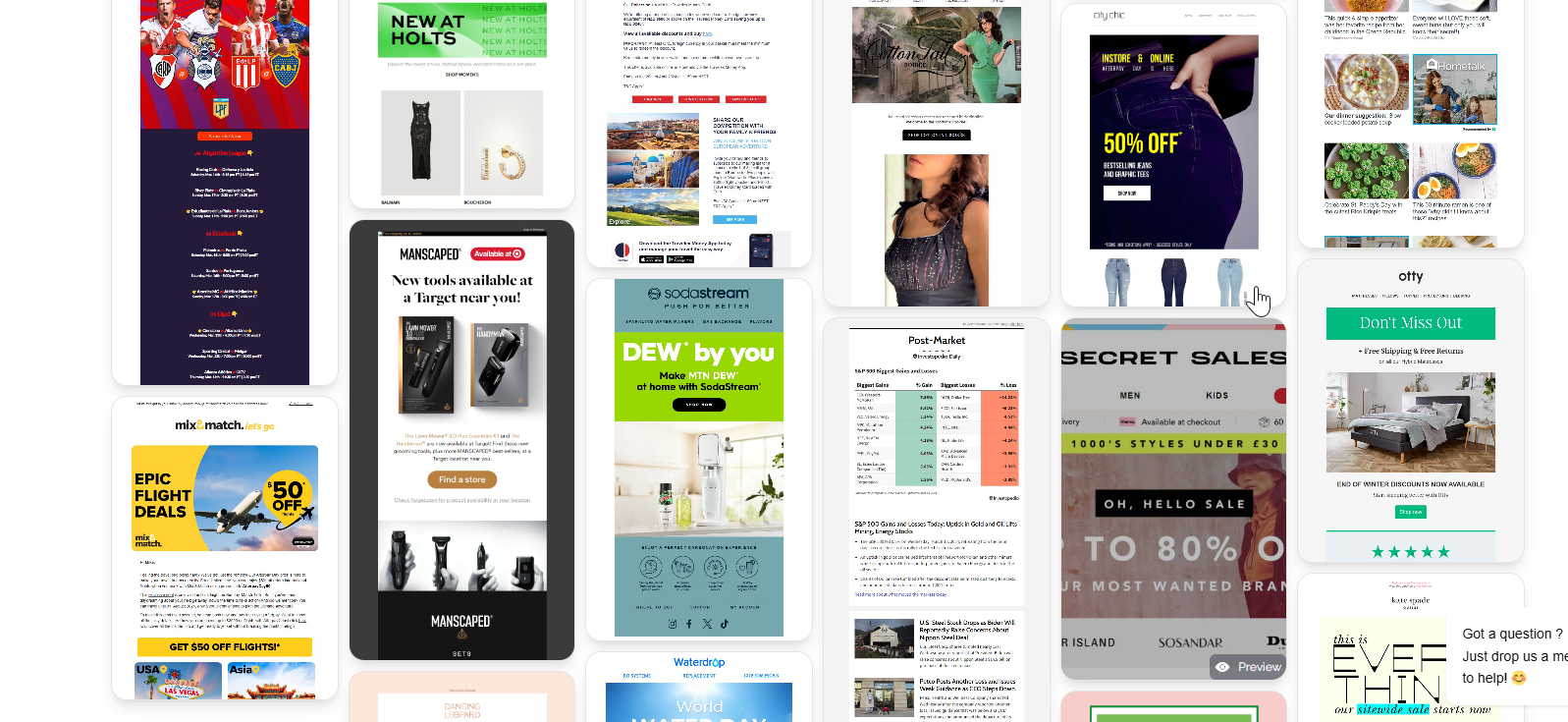
Browse MailGlider to see how top SaaS brands and B2B companies structure their welcome and onboarding emails — a fast way to understand what great looks like before you write your own sequence.