B2B Email Marketing: The 2025 Playbook for Pipeline and Revenue
B2B email marketing is the use of targeted email campaigns to generate leads, nurture prospects through a sales cycle, and retain and expand existing customers — in a business-to-business context. Unlike B2C email, where a single person makes a fast, often impulse-driven purchase, B2B email must influence multiple stakeholders over weeks or months, building trust and demonstrating ROI at every stage.
Quick Answer: B2B email works best when it educates, not just promotes. Buyers are evaluating risk. Your emails need to reduce uncertainty, build credibility, and move prospects toward a clear next step — whether that's a demo, a trial, or a conversation with sales.
Why B2B Email Marketing Is Different from B2C
| Dimension | B2B | B2C |
|---|---|---|
| Decision makers | 2–10 stakeholders | Usually 1 person |
| Sales cycle | Weeks to months | Hours to days |
| Email tone | Professional, evidence-based | Emotional, brand-driven |
| Primary goal | Lead nurturing + pipeline | Conversion + retention |
| Best performing content | Case studies, ROI data, frameworks | Offers, stories, urgency |
| Personalization driver | Company size, role, industry | Past purchases, behavior |
The mechanics are the same — write emails, send to list, track results. But the strategy is fundamentally different because you're selling to organizations, not individuals.
The B2B Email Funnel
B2B email should map directly to the buyer's journey:
Top of Funnel (Awareness)
Goal: Build trust and get on the radar of potential buyers.
Types:
- Newsletter / thought leadership
- Research findings and data
- "How to solve [problem]" guides
Tone: Educational. No selling yet. These people haven't raised their hand as buyers.
Middle of Funnel (Consideration)
Goal: Nurture leads who've shown interest. Move them toward evaluation.
Types:
- Case studies from similar companies
- Product walkthroughs and feature breakdowns
- Comparison guides (your product vs. alternatives)
- Webinar invites or recorded demos
Tone: Evidence-driven. Show proof. Address objections.
Bottom of Funnel (Decision)
Goal: Close the deal or push to sales conversation.
Types:
- "Let's talk" emails from a sales rep
- Trial or demo invitation with strong CTA
- ROI calculator or custom proposal follow-up
- Limited-time incentives (extended trial, implementation support)
Tone: Direct. Specific. Personalized. Clear next step.
Post-Purchase (Expansion)
Goal: Retain and grow the account.
Types:
- Onboarding sequences
- Feature adoption nudges
- Quarterly business reviews (triggered emails)
- Upsell / cross-sell at relevant moments
The 5 Most Effective B2B Email Campaign Types
1. The Case Study Email
When: Middle of funnel, after a prospect has engaged with initial content.
Include: A customer similar to the prospect's company, a specific problem, what they did with your product, and a quantified outcome.
The more specific, the more credible. "Reduced reporting time from 4 hours to 25 minutes" beats "saved hours every week."
2. The Nurture Sequence
When: After a content download, webinar registration, or demo request.
A 4–6 email sequence sent over 2–3 weeks:
- Email 1: Deliver the promised asset + quick next step
- Email 2: Related piece of content that deepens the topic
- Email 3: Case study from a similar company
- Email 4: Common objection addressed directly
- Email 5: Soft CTA — "Is this something worth a conversation?"
- Email 6: Final follow-up if no response
3. The Re-Engagement Email (for cold leads)
When: A qualified lead who went dark after initial interest.
Subject: "Still exploring [problem area]?"
Keep it short. Reference the specific thing they showed interest in. Give them a low-friction way to re-engage (watch a 3-minute video, read one case study) rather than jumping straight to "book a call."
4. The Account-Based Email
When: Targeting a specific named account with a personalized approach.
This is not a mass email — it's written specifically for one company (or one tier/segment of companies). Reference their:
- Company name and specific challenge
- Industry-specific data or benchmark
- Something they published (a job posting, a report, a press release)
ABM emails take more time but convert at significantly higher rates because they feel genuinely relevant.
5. The Sales Follow-Up Sequence
When: After a demo, meeting, or proposal.
Most deals are lost not because the prospect said no, but because follow-up stopped too early. A structured follow-up sequence:
- Email 1 (same day): Meeting summary + agreed next steps
- Email 2 (Day 3): One supporting resource (case study, ROI analysis)
- Email 3 (Day 7): Check-in — "Any questions on your end?"
- Email 4 (Day 14): New angle — a relevant piece of news or content
- Email 5 (Day 21): The honest break-up email — "Should I close this out or is timing still a factor?"
The break-up email often generates more responses than all previous follow-ups combined.
B2B Email Personalization at Scale
Personalization in B2B goes beyond first names. The most effective levers:
Firmographic segmentation:
- Company size (1–10, 11–50, 51–200, 200+)
- Industry vertical
- Revenue range
- Tech stack (if you have integration or compatibility relevance)
Role-based segmentation:
- C-suite: focus on strategic outcomes, ROI, competitive positioning
- Managers: focus on workflow efficiency, team adoption, ease of reporting
- Individual contributors / practitioners: focus on features, speed, workflow
Behavioral segmentation:
- Opened 3+ emails but never clicked → adjust the CTA approach
- Visited pricing page → accelerate to sales-qualified sequence
- Downloaded case study → send related case study from same industry
B2B Email Metrics That Matter
| Metric | B2B Benchmark | What It Signals |
|---|---|---|
| Open rate | 25–35% | Subject line + sender reputation |
| Click rate | 3–8% | Body copy + CTA quality |
| Reply rate | 5–15% (for 1:1 sales emails) | Relevance + personalization |
| Demo request rate | 2–5% | Offer + targeting quality |
| Unsubscribe rate | <0.3% per email | List quality + relevance |
| MQL-to-SQL rate (email-sourced) | Varies by industry | Nurture sequence quality |
Note: In B2B, reply rate is often more meaningful than click rate for mid-funnel emails. A reply from the right person at the right company is worth more than 100 link clicks.
Subject Lines That Work in B2B
B2B subject lines that consistently perform:
- Specific and outcome-focused: "How [CompanyName] reduced [problem] by 40%"
- Question-based: "Are you tracking [specific metric]?"
- Referential: "Re: [relevant topic they care about]"
- Curiosity: "The benchmark most [role] miss"
- Direct: "Quick question about [their company]"
Avoid: excessive exclamation marks, vague superlatives ("amazing," "incredible"), "Just checking in" (overused and signal-free).
Frequently Asked Questions
What is B2B email marketing?
B2B email marketing is using targeted email to generate, nurture, and convert business leads — selling to other companies rather than individual consumers. It involves longer sales cycles, multiple stakeholders, and an emphasis on education, proof, and trust over promotional tactics.
How often should you email B2B prospects?
For nurture sequences: 1–2 emails per week is standard. For active sales follow-up: every 3–7 days is appropriate. For a newsletter: weekly or bi-weekly. Always prioritize relevance over frequency — a single highly relevant email outperforms five generic ones.
What makes a good B2B email subject line?
Specificity and relevance. Subject lines that reference the prospect's company, role, or a specific challenge they face consistently outperform generic lines. Question-based subject lines also perform well in B2B because they invite engagement.
How do I generate B2B email leads?
Content upgrades (gated research, templates, calculators), webinar registrations, LinkedIn lead gen forms, partner co-marketing, and free tool offers are the most common sources. Quality matters more than volume — 500 genuinely interested contacts outperform a purchased list of 10,000.
What is a B2B email nurture sequence?
A series of automated emails sent to B2B prospects over 2–6 weeks after they show initial interest (download, webinar registration, demo request). The sequence is designed to build trust, address objections, and move prospects from awareness to sales conversation.
Conclusion
B2B email marketing that works is built on a foundation of genuine relevance. Your prospects are smart, busy, and skeptical. Generic emails go unread. Personalized, evidence-backed, well-timed emails move deals forward.
The playbook: segment by role and stage, lead with education and proof, personalize to the company and individual where possible, and make every email about their outcome — not your product's features.
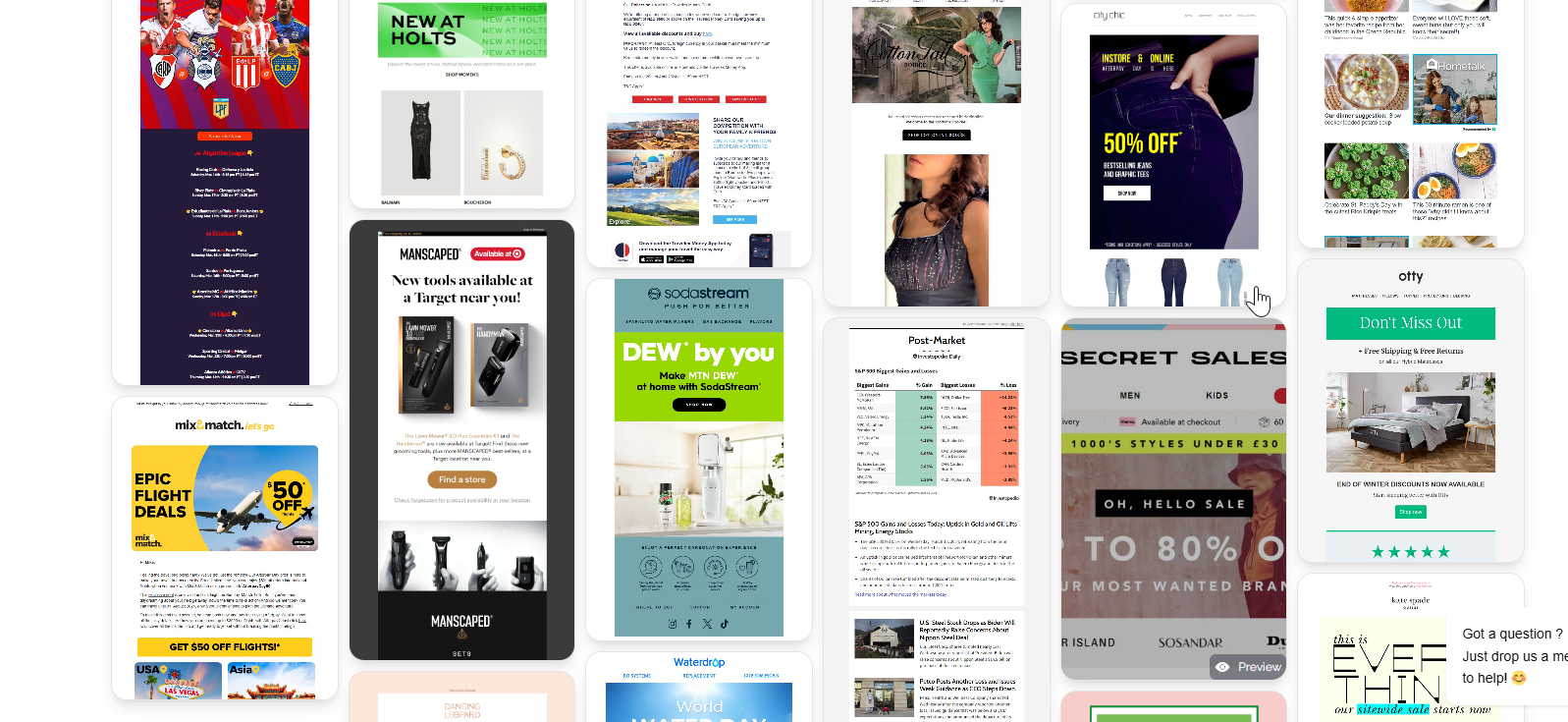
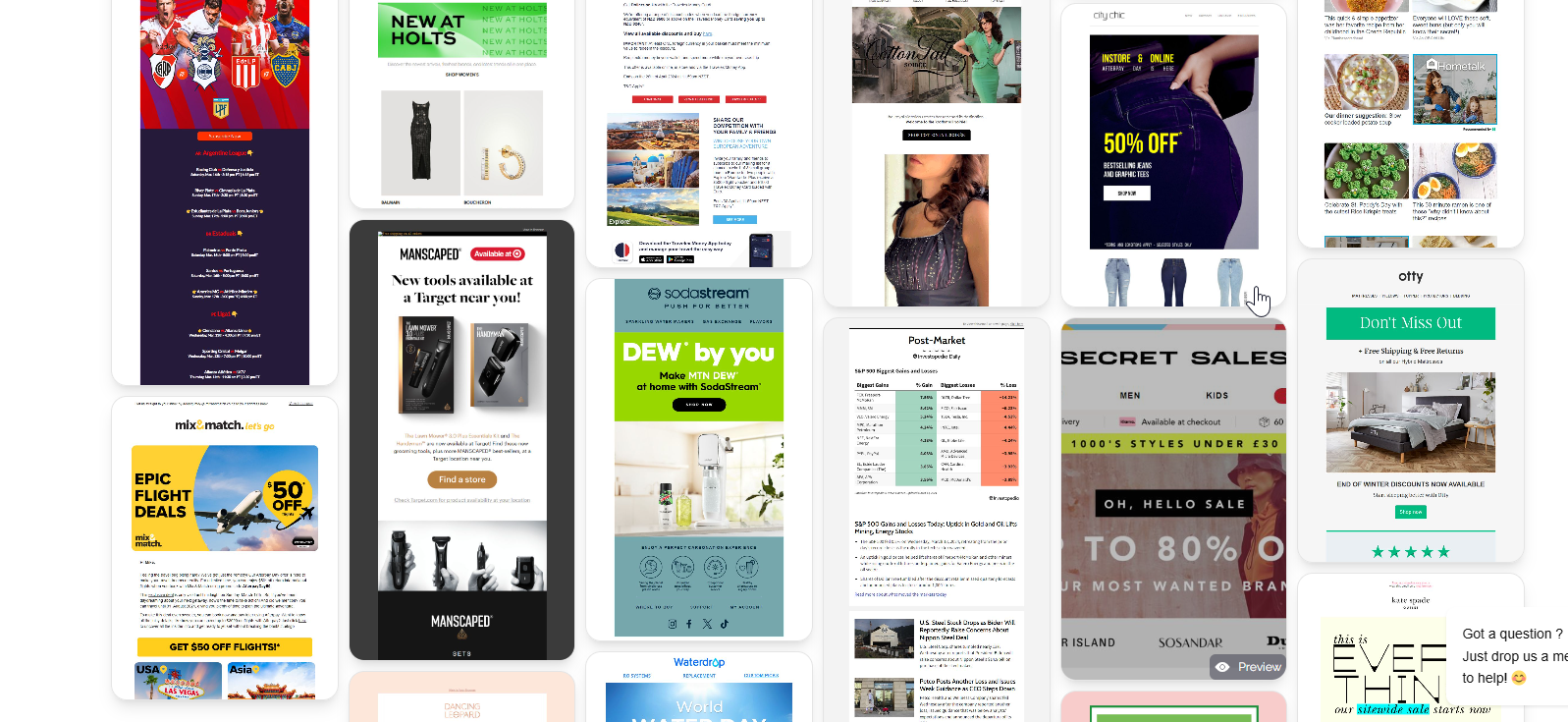
Browse MailGlider to study how top B2B brands and SaaS companies structure their email campaigns — the fastest way to understand design and copy patterns that work before you build your own.