How to Run a Product Launch Email Campaign (Step-by-Step)
A product launch email campaign is a structured sequence of emails sent before, during, and after a product launch — designed to build anticipation, maximize conversions on launch day, and extend revenue momentum in the days that follow. It is one of the most impactful email programs you can run, because a well-built audience, primed over weeks, converts at dramatically higher rates than a cold launch announcement.
Quick Answer: The best product launch email campaigns run in 3 phases — pre-launch (build anticipation and a waitlist), launch day (announce and convert), and post-launch (follow up, extend urgency, gather social proof). Most teams underprepare the pre-launch phase. This is where the launch is actually won.
The 3-Phase Product Launch Email Framework
PRE-LAUNCH (2–4 weeks before)
     ↓ Build anticipation, grow the waitlist
LAUNCH DAY (1–3 days)
     ↓ Announce, convert, close
POST-LAUNCH (1–2 weeks after)
     ↓ Social proof, re-engage, extend
Phase 1: Pre-Launch (2–4 Weeks Before Launch)
The pre-launch phase is where the launch is won or lost. A list that's been warmed up, educated, and excited about what's coming converts at 5–10x the rate of a list that receives a cold announcement.
Pre-launch goals:
- Build a waitlist of interested early adopters
- Educate the market on the problem your product solves
- Create genuine anticipation without overpromising
Pre-Launch Email 1: The Teaser (3–4 weeks out)
Goal: Announce that something is coming. Don't reveal everything — create curiosity.
Subject line examples:
- "Something we've been building for months..."
- "We're launching something new — and we want you to be first"
- "A sneak peek at what's coming"
What to include:
- A hint at the problem you're solving (don't name the solution yet)
- A reason to stay tuned ("We'll be sharing exclusive early access with our list")
- Optional: a waitlist link to capture early-intent signals
Pre-Launch Email 2: The Problem Story (2–3 weeks out)
Goal: Articulate the problem your product solves in a way that resonates deeply with your audience.
Don't talk about your product. Talk about the pain. If you've done your research, this email will get replies from subscribers saying "this is exactly my situation."
Subject line examples:
- "Why [common approach] keeps failing"
- "The problem with [industry status quo]"
- "A story that will sound familiar"
Pre-Launch Email 3: Behind the Scenes (1–2 weeks out)
Goal: Build trust and connection by showing how and why you built what you built.
What to include:
- How the product came to be — founder story, customer insight, or market observation
- A preview: one compelling feature or use case
- Waitlist CTA (if you haven't launched it already) or early access invitation
Pre-Launch Email 4: Early Access / Last Call (3–5 days before launch)
Goal: Drive urgency for your waitlist or early access program.
Subject line examples:
- "Early access closes in 3 days"
- "Join the waitlist — we go live [Day]"
- "[Launch date] — here's what early access members get"
What to include:
- Specific launch date and time
- What early access members get that others won't (bonus, pricing, features)
- A strong, urgent CTA
Phase 2: Launch Day
Launch Email 1: The Announcement (Send at launch time)
Goal: Convert. This is the email that makes the ask.
Subject line examples:
- "We're live — [Product] is now available"
- "[Product] is here — here's everything you need to know"
- "Launch day: [Product] is now open"
What to include:
- What the product is (clear, specific, benefit-forward)
- The core value proposition in 2–3 sentences
- Social proof if you have it (beta users, early reviews)
- Clear pricing (don't hide it)
- A compelling primary CTA — "Get started" / "Claim early access" / "Buy now"
- FAQs — reduce friction by preemptively answering the top 3 questions
Length: This email can be longer than usual because the reader is at peak intent. But don't pad it — every line should serve the conversion.
Launch Email 2: The Story (Day 2 of launch)
Goal: For subscribers who didn't convert on day 1, offer a different angle.
Day 1 buyers respond to the announcement and enthusiasm. Day 2 non-buyers often need more proof, a different framing, or a specific use case.
Options:
- A customer story: "Here's how [Beta User Name] is using [Product] to do [specific thing]"
- A founder letter: Personal reflection on why you built this, what you're most excited about, who it's for
- A comparison: "[Product] vs. how you're solving this today"
Launch Email 3: Last Chance / Closing (Day 3 or before launch pricing ends)
Goal: Close with urgency. If you have a launch offer (early-bird pricing, bonus, limited availability), this email drives the final wave of conversions.
Subject line examples:
- "24 hours left at launch pricing"
- "Early access closes tonight"
- "Last call — [Product]"
What to include:
- Clear statement of what's ending (price increase, bonus removal, access limit)
- A genuine deadline (don't fake urgency — it destroys trust)
- The primary CTA repeated
This is the highest-converting email of most launches. People who have been considering since Day 1 often need a real deadline to decide.
Phase 3: Post-Launch (1–2 Weeks After)
The launch week isn't the end of the campaign. It's the beginning of the social proof phase.
Post-Launch Email 1: Early Wins / Momentum (Day 5–7 after launch)
Share what's happened since launch:
- Number of customers who joined
- A compelling early testimonial or use case
- A data point if you have one ("Customers are already seeing X")
This email serves two purposes: It makes existing customers feel good about their decision. It gives fence-sitters one more reason to join.
Post-Launch Email 2: The Feature Deep-Dive (Week 2)
Now that launch excitement has settled, go deep on one feature or use case that wasn't covered in launch day communications.
Great for long-tail conversions and driving new use cases for existing customers.
Segmenting Your Launch Campaign
One of the most valuable things you can do for a launch campaign: differentiate between your list segments.
| Segment | What They Need | Adjusted Messaging |
|---|---|---|
| Waitlist | Confirmation + priority access | "You're first — here's your exclusive link" |
| Existing customers | Integration with what they already use | "This builds on what you already have" |
| Warm prospects | Full pitch + proof | Standard launch sequence |
| Inactive subscribers | More context, lower pressure | "You might have missed this" + softer CTA |
| Non-subscribers (social) | Lead to a landing page first | Don't send email — drive to signup |
Subject Lines for Every Phase
Pre-launch:
- "Something big is coming"
- "Want early access?"
- "3 days until we go live"
Launch day:
- "[Product] is live — here's everything"
- "We launched — come see"
- "Launch day: [Product name]"
Post-launch:
- "What happened in our first week"
- "An early win worth sharing"
- "48 hours left at launch pricing"
Frequently Asked Questions
How far in advance should I start a product launch email campaign?
Start your pre-launch sequence 3–4 weeks before launch day for a significant product. For smaller feature launches or updates, 1–2 weeks of pre-launch is sufficient. The more significant the launch, the more time you need to build anticipation and educate the market.
How many emails should a product launch campaign have?
A full launch campaign has 6–9 emails: 3–4 pre-launch, 2–3 on launch day/week, and 2 post-launch. A minimal effective campaign has 4: teaser, launch announcement, launch follow-up with story, and closing urgency email.
Should I email my entire list or just a segment?
Segment at minimum by engagement level. Your actively engaged subscribers should get the full sequence. Your inactive segment might only get the launch announcement, with gentler messaging. Avoid burning through your list with a 9-email sequence sent to people who haven't engaged in months.
What if I don't have a waitlist before launch?
You can still run a launch campaign — it just won't have the pre-launch segmentation advantage. Focus your energy on the launch day sequence and post-launch momentum. And for your next launch, start building the waitlist earlier.
How do I create urgency without being manipulative?
Use genuine constraints: a real early-bird price that increases after a date, an actual limit on beta spots, or a bonus that genuinely expires. If you invent urgency (fake countdown timers, artificial scarcity), your audience will notice — and it permanently damages the trust you've built. Real urgency is more powerful than manufactured urgency.
Conclusion
A product launch email campaign is a skill. Like any skill, it gets better with practice and deliberate attention to what worked and what didn't after each launch.
The principles don't change: build anticipation before you launch, convert hard on launch day, extend momentum with social proof after. Pre-launch is where most teams underinvest. Launch day is where urgency must be genuine. Post-launch is where second-wave conversions happen.
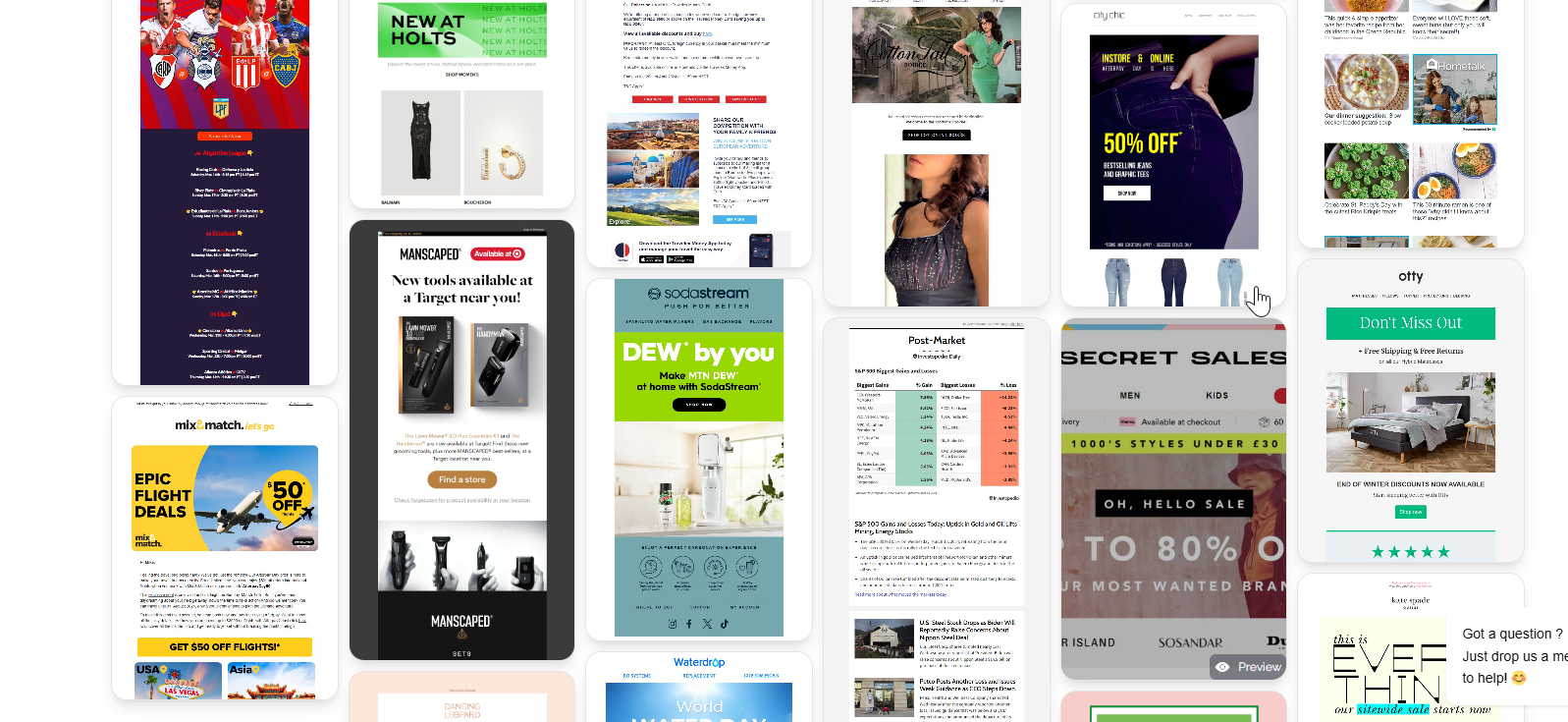
Browse MailGlider to see how top brands design their promotional and launch emails — great reference material for understanding the design patterns and copy structures that perform best at high-intent moments.