Email Frequency: How Often Should You Email Your List?
Email frequency refers to how often you send emails to your subscribers — daily, weekly, bi-weekly, monthly. It is one of the most debated topics in email marketing, and one of the most consequential decisions you'll make. Send too infrequently and your list goes cold — subscribers forget who you are and why they signed up. Send too often and unsubscribes, spam complaints, and disengagement spike.
Quick Answer: For most businesses, weekly is the right default. It's frequent enough to stay top of mind and build an expectation, infrequent enough to maintain value. The caveat: frequency is only sustainable if you have the content quality to support it. One excellent email a week beats three mediocre ones.
Why Frequency Is a Variable, Not a Fixed Rule
The "right" email frequency depends on multiple factors that vary by business:
| Factor | Lower Frequency Suggests | Higher Frequency Suggests |
|---|---|---|
| Content type | Long, deep-dive content | Short, timely updates |
| Industry | B2B, considered purchases | E-commerce, daily deals |
| Audience expectation | Set at signup (promised bi-weekly) | Set at signup (promised daily) |
| List engagement | Low engagement, cold list | High engagement, loyal subscribers |
| Product pace | Slow product cycle | Frequent releases, seasonal products |
| Onboarding vs. ongoing | Ongoing marketing emails | New user onboarding sequences |
No rule applies universally. What does apply universally: whatever you commit to, be consistent.
Frequency by Use Case
Newsletters: Weekly or Bi-Weekly
The sweet spot for most newsletters is weekly or bi-weekly. Weekly is most common — it builds a habit and expectation without demanding too much from your content production.
Daily newsletters exist (The Hustle, Morning Brew, etc.) and work — but they're built around large teams, high production quality, and audiences who specifically opted in for daily. Don't default to daily because you see it working for someone else.
Monthly newsletters risk going cold. A subscriber who hasn't heard from you in 30 days has likely forgotten the context of why they signed up. If monthly is all you can sustain, be very intentional about re-establishing context in every email.
E-Commerce: 2–4 Times Per Week (for active senders)
E-commerce audiences typically tolerate higher frequency than B2B or content audiences — especially when emails are product-relevant and offer-driven. Many successful DTC brands send 3–5 times a week during peak seasons (Q4, sale periods) without seeing significant unsubscribe spikes.
The caveat: E-com frequency only works if you're segmenting. Your VIP customers and your recently-lapsed customers should receive emails at different frequencies. Sending 4x/week to your entire list, including cold contacts, will damage deliverability.
Outside of promotions: 1–2 times per week is a solid baseline for e-com. Increase during sale periods; don't maintain high frequency in off-peak months without a corresponding content reason.
B2B / SaaS Marketing Emails: Weekly or Bi-Weekly
B2B audiences are busy and have higher tolerance for infrequent, high-quality sends than for frequent mediocre ones. Weekly to bi-weekly is the standard for most B2B marketing newsletters. Monthly is acceptable for relationship-based or enterprise audiences.
For SaaS onboarding sequences: Frequency is higher — often daily or every 2 days for the first 7–14 days — because the sequences are triggered by a specific action (signup) and are directly relevant to the user's current moment. This is different from ongoing marketing email frequency.
Promotional Campaigns: 2–3 Emails Over 3–7 Days
For a single campaign (launch, sale, event), 2–3 emails over the campaign window is standard:
- Announcement email
- Reminder (mid-campaign)
- Last chance (24 hours before end)
This is a temporary frequency spike, not your baseline. Subscribers understand the cadence context. After the campaign ends, return to your normal schedule.
Automated Sequences: Compress Timing Early, Then Space Out
For welcome sequences, nurture sequences, or SaaS onboarding:
- Days 1–7: Emails every 1–2 days (users are engaged, evaluating, have questions)
- Days 8–30: Every 3–5 days (moving into habit-building and deeper usage)
- Beyond day 30: Transition to your standard marketing email cadence
The early compression is intentional — new users are most engaged immediately after signup. That window closes fast.
Signs You're Emailing Too Often
Watch for these signals that you've crossed the threshold:
- Unsubscribe rate above 0.3% per send — especially if it wasn't always this high
- Spam complaint rate rising — even small increases here are meaningful
- Click rate declining over successive sends — audience fatigue setting in
- Replies becoming more negative — "Please stop emailing me so much"
- Open rate declining while list size stays stable — engagement is declining, not list quality
Signs You're Not Emailing Enough
- List goes cold — re-engagement campaigns consistently find large portions of your list have no memory of you
- Unsubscribes spike after an email — subscribers forgot who you are and treat your email as spam
- Open rates dramatically lower than benchmarks — may indicate list staleness
- Revenue per email is high, but total email revenue is low — you're leaving money on the table by sending too rarely
- Competitors own the conversation — because you're silent, other brands fill the space
The Preference Center Solution
One of the best ways to manage frequency across a diverse list: let subscribers choose.
A preference center is a page where subscribers can set:
- How often they want to hear from you (daily, weekly, monthly, only for major news)
- What topics they're interested in
- What they don't want to see
Subscribers who control their frequency stay on lists longer and engage more. The overhead of building and maintaining a preference center pays off in lower unsubscribes and higher average engagement.
How to implement: Most major ESPs support preference center pages. Add a "Manage preferences" link in your email footer alongside unsubscribe.
The Quality Constraint
Here's the factor that overrides everything: content quality determines the sustainable frequency.
If every email you send is genuinely useful, interesting, or valuable, your subscribers will want more. If your emails feel like filler — broadcasting for broadcasting's sake — even once-a-month will generate complaints.
Before increasing frequency, ask: "Is every email I'm currently sending earning its place in the inbox?" If the answer is yes, you may be able to increase. If any of your sends feel like filler, fix quality before increasing quantity.
Frequency by Audience Type: Summary
| Audience Type | Recommended Frequency | Notes |
|---|---|---|
| Newsletter (general) | Weekly | Most sustainable; builds habit |
| B2B marketing | Bi-weekly to weekly | Quality over quantity |
| E-commerce (active) | 2–4x/week | Segment; reduce for inactive |
| SaaS onboarding | Daily to every 2 days (first 2 weeks) | Triggered, not broadcast |
| SaaS ongoing | Weekly to bi-weekly | Product updates + education |
| Promotional campaigns | 2–3 emails over campaign window | Temporary spike, then normal |
| Re-engagement | 3–4 emails over 2–3 weeks | Then clean the list |
Frequently Asked Questions
How often should I email my list?
Weekly is the most sustainable default for most businesses. It's frequent enough to build habit and recall, infrequent enough to maintain value. Adjust based on your content quality, audience type, and the signals (unsubscribe rate, spam complaints) your list gives you.
Is emailing daily too much?
For most businesses, yes. Daily email requires exceptional content quality and an audience that explicitly opted in for daily sends. The major daily newsletters (Morning Brew, etc.) are the exception, not the model. For most brands, daily sends drive up unsubscribes and spam complaints.
Will emailing more often hurt my unsubscribe rate?
It depends on your content quality and audience expectations. High-value, highly relevant emails at higher frequency often maintain low unsubscribe rates. Low-quality sends at high frequency will spike them. Frequency is less the variable than relevance and value.
What happens if I don't email my list for a month?
Your list goes partially cold. Open rates typically drop because subscribers have moved on mentally. Your next email after a gap should re-establish context ("It's been a while — here's who we are and what this email is about"). Consistent cadence prevents this.
Should I email new subscribers more frequently than existing ones?
Yes. New subscribers should enter an onboarding or welcome sequence that's more frequent (every 1–3 days) for the first 1–2 weeks. This captures their peak interest window. Then transition them to your standard marketing email cadence.
Conclusion
Email frequency isn't a number — it's a relationship. The right cadence for your list is one that your audience welcomes, your content quality supports, and your deliverability sustains.
Start with weekly. Watch the signals. Adjust based on data, not assumption. When in doubt, prioritize quality over volume — one exceptional email a week will always outperform five forgettable ones.
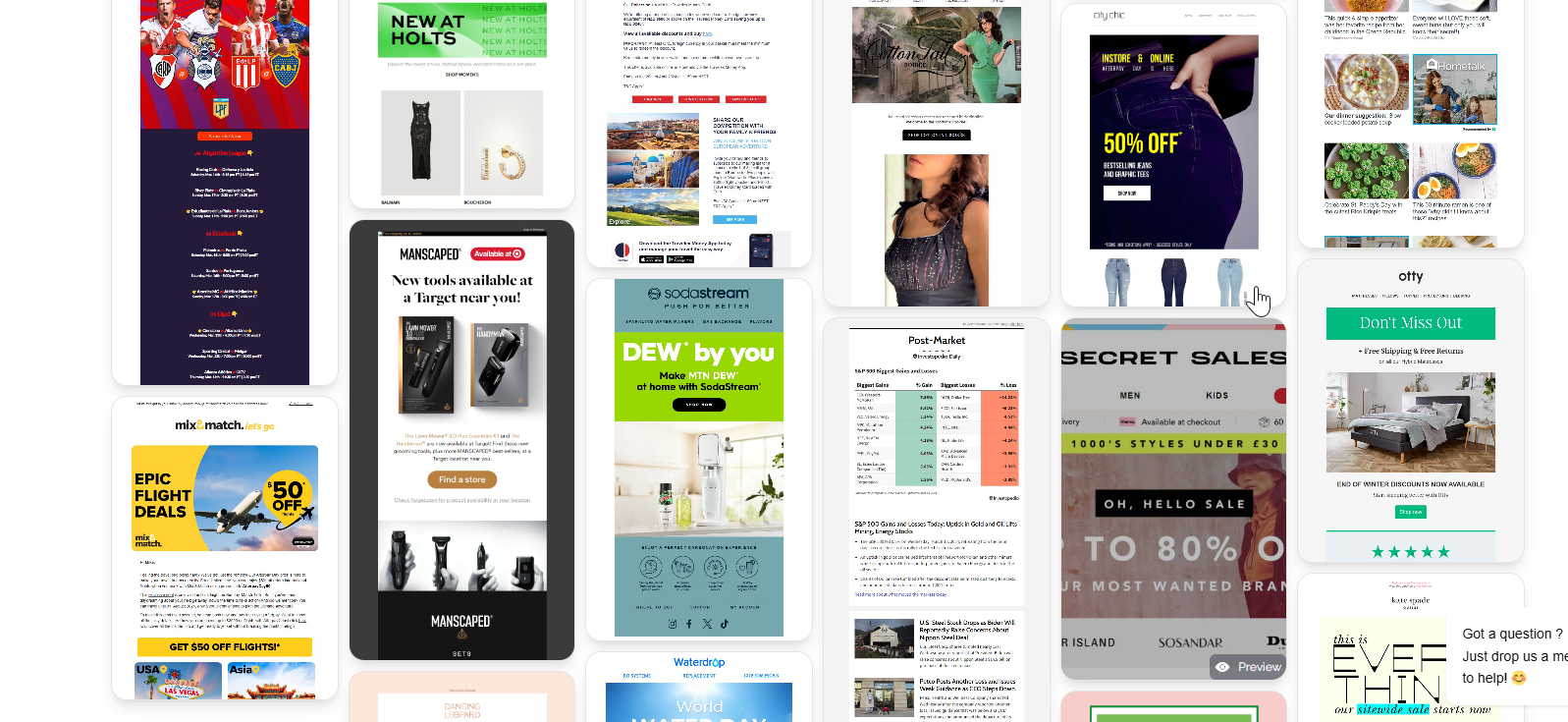
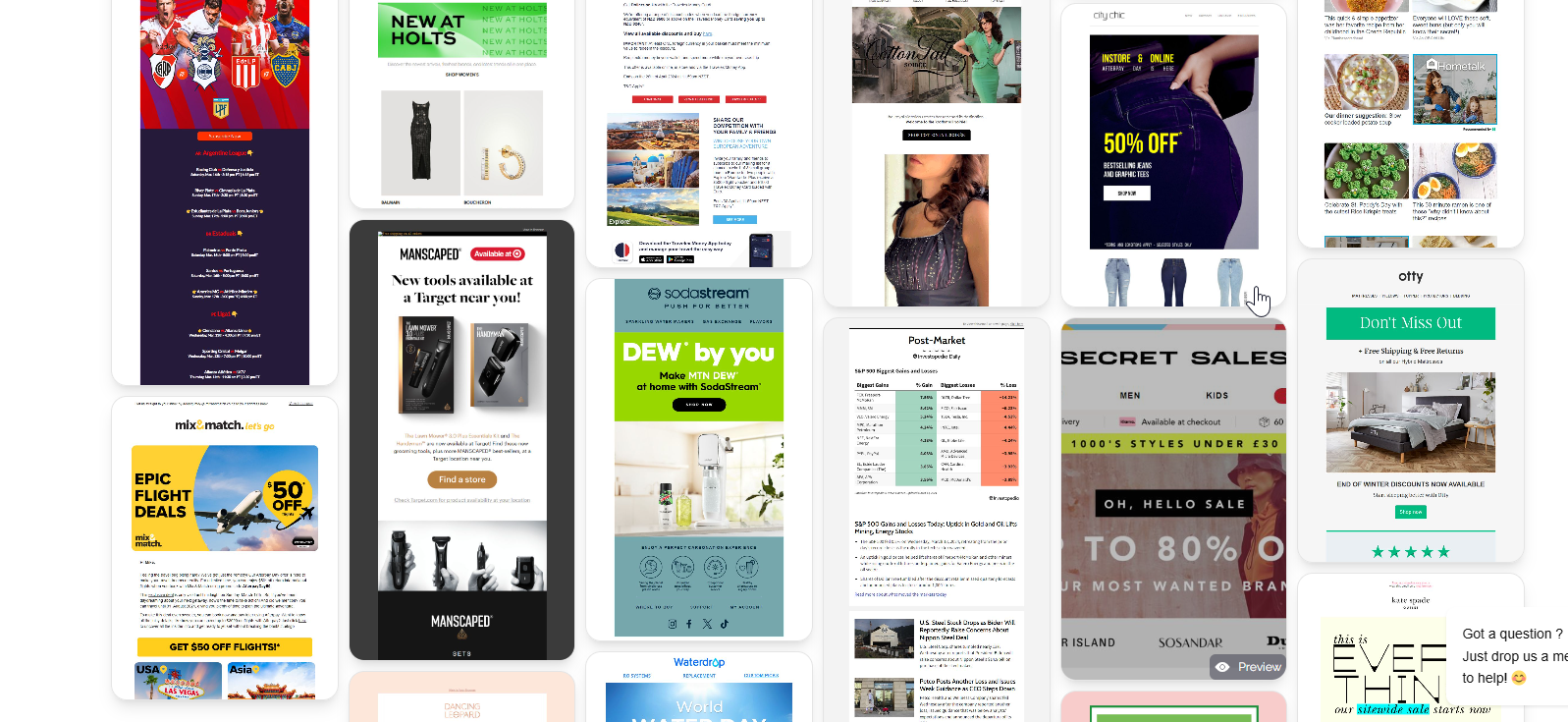
Browse MailGlider to see how top brands — from DTC to B2B SaaS — design their ongoing email programs. Understanding what regular, high-quality email looks like across industries helps calibrate your own cadence expectations.