How to Write Email Copy That Converts (Framework + Examples)
Email copywriting is the craft of writing email content — subject lines, preview text, body copy, and CTAs — that compels the reader to take a specific action. The difference between a 1% click rate and a 6% click rate on the same offer is almost always the copy. Not the design, not the timing, not the offer itself — the words.
Quick Answer: Great email copy follows one rule: write for one person, with one goal, at one moment in their journey. Every element — subject line, opener, body, CTA — should be in service of getting that specific person to take that specific action. Clarity beats cleverness every time.
Why Email Copy Is Different from Other Marketing Writing
Email copy operates under constraints most other formats don't face:
- Brutal competition for attention — your email is one of 100+ in the inbox
- The delete decision is instant — readers judge an email in 2–3 seconds
- No visual context — unlike a landing page, there's no ambient trust-building (hero image, nav, social proof) before the copy starts working
- Mobile first — most emails are read on a 6-inch screen, skimmed in 15 seconds
This means email copy has to earn every line. No filler, no preamble, no slow build.
The Anatomy of High-Converting Email Copy
Every marketing email has five components. Each has a job:
| Component | Job | Length |
|---|---|---|
| Subject line | Get the open | 30–50 characters |
| Preview text | Reinforce and extend the subject line | 40–90 characters |
| Opener | Hook the reader past the first sentence | 1–2 sentences |
| Body | Make the case, build desire, handle objections | 3–8 sentences or short sections |
| CTA | Drive the specific action | 1 button or link, 2–5 words |
Weak copy at any stage breaks the chain. A great subject line that opens into a boring body loses the click. A compelling body with a vague CTA loses the conversion.
Writing Subject Lines That Get Opened
The subject line is the gate. If it doesn't open, nothing else matters.
The 5 Subject Line Formulas That Work
1. The Specific Promise
State exactly what the reader gets.
- "Your onboarding checklist (3 steps)"
- "5 templates for your next product launch"
- "How we cut churn by 32% (and what we changed)"
2. The Curiosity Gap
Hint at something interesting without giving it away.
- "The email mistake costing you opens"
- "We tried this — it worked better than expected"
- "What happens when you stop discounting"
3. The Direct Question
Ask something the reader wants to know the answer to.
- "Is your email list actually growing?"
- "What's your trial-to-paid rate?"
- "Did last week's campaign work?"
4. The Counterintuitive Statement
Lead with something that challenges a common assumption.
- "More emails = worse results (sometimes)"
- "Your best customers aren't who you think"
- "Stop A/B testing subject lines"
5. The Personal / Conversational
Write like a person, not a brand.
- "Quick question about your onboarding"
- "Saw this and thought of you"
- "Honest take on what worked this quarter"
What to Avoid in Subject Lines
- All caps: "LAST CHANCE TO SAVE" — spam signal, also aggressive
- Excessive punctuation: "Act now!!!" — instantly filtered or ignored
- Vague teases: "You won't believe this" — everyone has trained past clickbait
- Misleading lines: If the email doesn't deliver on the subject, unsubscribe rate spikes
Writing Preview Text That Works With the Subject Line
Preview text is the 40–90 characters shown in the inbox after the subject line. Most teams ignore it or let it default to "View this email in your browser."
Use preview text to:
- Complete a sentence started in the subject line
- Add urgency or specificity
- Give a secondary reason to open
Examples:
| Subject | Preview Text |
|---|---|
| "Your trial ends tomorrow" | "Here's what you'll keep — and what you'll lose access to" |
| "The email mistake costing you opens" | "We see it in 80% of the lists we audit" |
| "5 templates for your next launch" | "One of these is responsible for $47k in first-week revenue" |
Writing Email Openers That Keep People Reading
The first sentence determines whether the reader continues or leaves. You have no warm-up. No preamble. Start with something that makes them want the next sentence.
Bad openers:
- "I hope this email finds you well."
- "As the summer comes to a close..."
- "We're excited to announce..."
- "At [Company], we believe..."
Good openers:
- Lead with a specific, relatable problem: "Most abandoned cart emails get ignored for a simple reason: they feel like an afterthought."
- Lead with a data point: "The average SaaS trial-to-paid conversion rate is 14.5%. Most teams don't know their own number."
- Lead with a story: "A founder asked us last week why her open rates dropped 40% overnight."
- Lead with the conclusion: "There's one email type that every SaaS company underestimates — and it's responsible for more retained customers than any other."
Writing Body Copy That Builds the Case
Keep body copy short, scannable, and purposeful. Every sentence should either:
- Deepen the relevance of the topic, or
- Move the reader closer to the CTA
Formatting rules that lift click rates:
- Short paragraphs — 2–3 sentences max. Long blocks get skimmed over.
- Bold the key phrase in each section — readers scan before they read
- Use bullet points for lists of 3+ items
- Leave white space — give the eye places to rest
- One idea per section — don't stuff multiple concepts into a single email
Structuring longer emails:
If your email needs more than ~100 words:
Problem / Hook (2–3 sentences)
↓
Solution / Value (the meat — can use subheadings)
↓
Social proof or example (1–2 sentences)
↓
CTA (single, clear, specific)
Writing CTAs That Actually Get Clicked
The call-to-action is where copy meets conversion. Most CTAs fail because they're generic.
Generic CTAs (low conversion):
- "Click here"
- "Learn more"
- "Submit"
- "Get started"
Specific CTAs (higher conversion):
- "Download the guide"
- "Start your free trial"
- "See the full breakdown"
- "Book a 20-minute call"
- "Browse 300+ email templates"
The rule: the CTA should describe the action and the outcome. Not "click here" — but "get the template" or "see how it works."
Placement: Include your primary CTA once above the fold (if the email is long) and once at the end. Never bury it as a text link in a paragraph.
Personalization That Actually Moves the Needle
{{first_name}} in the subject line used to be a power move. It's table stakes now. What actually lifts conversion:
- Behavioral personalization: "We noticed you started the setup but didn't finish step 3 — here's how to complete it."
- Segment-based copy: Different body copy for trial users vs. paying customers, even if the subject is the same.
- Timing personalization: Sending based on when that specific user last engaged, not a fixed schedule.
- Product/content personalization: Recommending the next action based on what they've already done.
The closer your copy is to what that specific person is thinking at that moment, the higher the conversion rate.
Frequently Asked Questions
How long should a marketing email be?
Long enough to make the case, short enough to keep attention. For most promotional emails: 75–150 words. For nurture and educational emails: 200–400 words. For case studies or deep dives: 500–800 words. If in doubt, cut by 30%.
Should email copy be formal or conversational?
Conversational wins in almost every context. Readers are people, and people respond to people. The exception is highly regulated industries (legal, financial, medical) where formal tone may be required. Outside of that, write like you'd write to a smart friend.
What makes a good email subject line?
Clarity, specificity, and relevance. A good subject line tells the reader exactly what they're getting or hints at something they want to know — and delivers on that promise inside the email.
How do I improve my email click-through rate?
Start with the CTA — make it specific and action-oriented. Then check your opener — are you hooking the reader in the first sentence? Finally, look at body copy length — if you're losing people before they reach the CTA, the body is too long or too vague.
Should I write email copy myself or use AI?
Both. Use AI (ChatGPT, Claude) to generate 10 first drafts and variants quickly. Then edit for brand voice, specificity, and accuracy. The best workflow: AI for volume and first drafts, humans for quality and judgment.
Conclusion
Email copywriting is a learnable skill. It's not about natural talent or creativity — it's about understanding what your reader wants at a specific moment and writing the most direct path from their problem to your solution.
The framework: a subject line that earns the open, an opener that earns the scroll, body copy that earns the click, and a CTA that makes the action effortless.
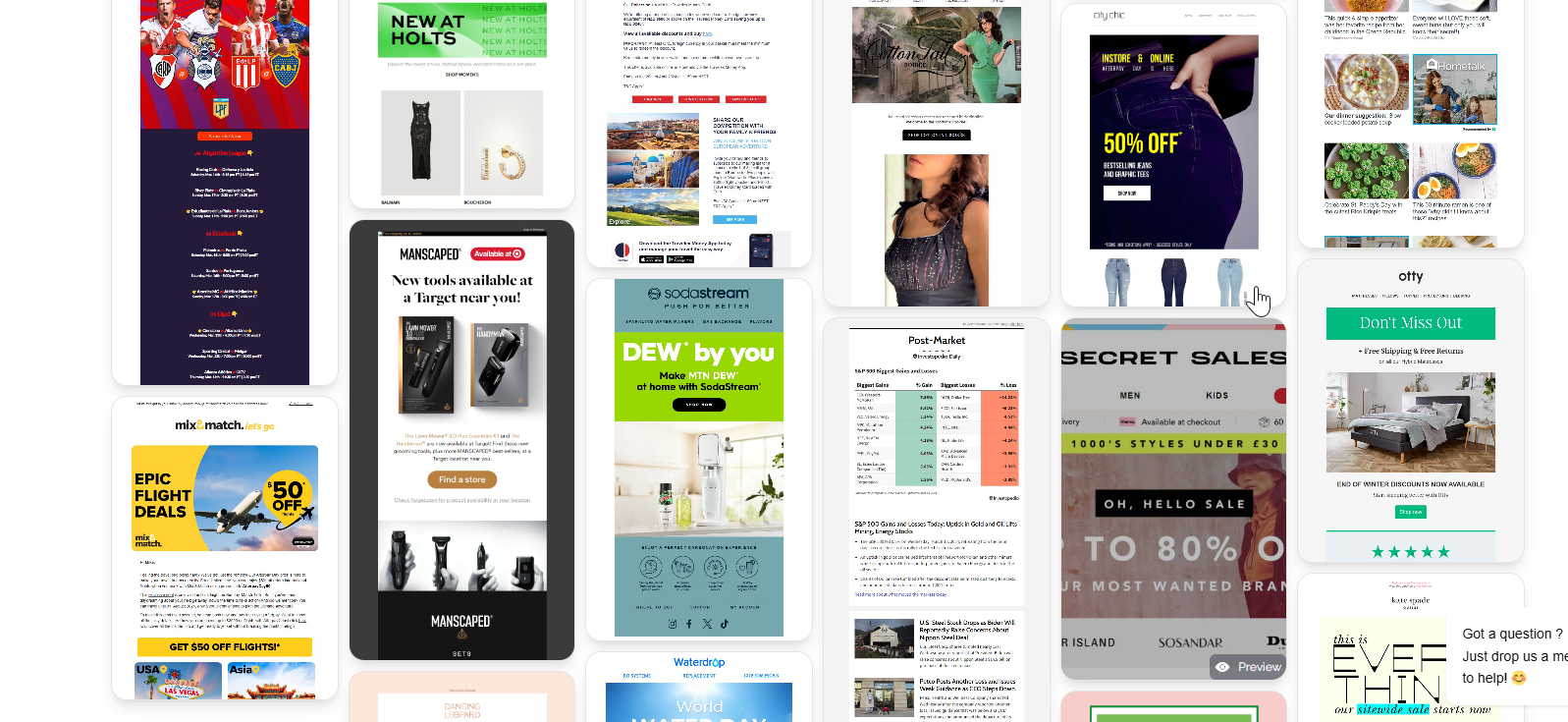
When you're looking for inspiration, MailGlider is a library of real emails from hundreds of top brands — a great resource for studying what high-converting email copy looks like across industries and campaign types before you write your own.