Calling the top tech firms that drive the market the “Magnificent Seven” has never not been cheesy. But it turns out we’ve been lucky to have a moniker that only induces minor cringing: CNBC’s resident loud person Jim Cramer, ripping into Tesla after last week’s rough earnings call, said only six companies — Alphabet, Amazon, Apple, Meta, Microsoft, and Nvidia — qualify as market leaders today, and should henceforth be known as the “Super Six Pack.” Good try, but no thank you.
In today’s email:
High-tech ed: TFW your professor is a hologram.
Financial independence: Young American adults don’t have it.
Digits: A cicada phenomenon, and more wild numbers.
Around the web: A good cry, why coffeehouses all look the same, fridge findings, and more.
👇 Listen: Stephen Hawking and Coco Chanel teaching college classes? How is this possible?
The Big Idea
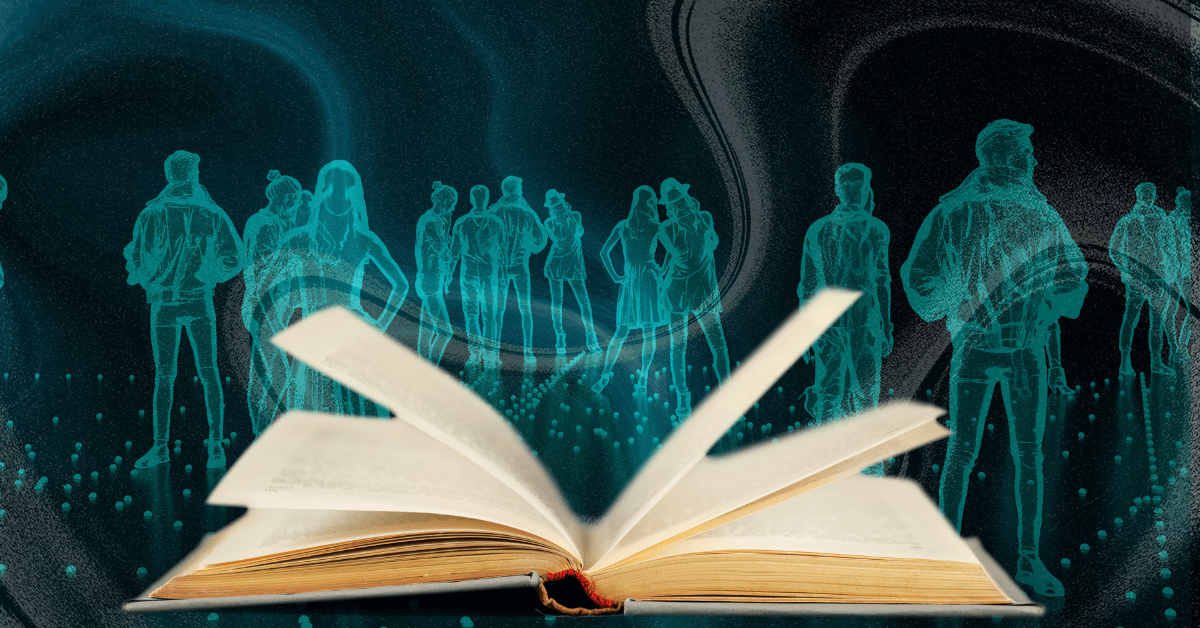
Zoom who? Higher ed is going holographic
Beaming in guest lecturers from across the world might become the new normal for students.
2024-01-29T00:00:00Z
Sara Friedman
If you’ve ever tried to pay attention to a Zoom lecture projected onto a whiteboard, you know how brutal it can be. (If you haven’t, count your blessings, and put down that grad school application.)
But at Loughborough University in England, learning might become — gasp — engaging again. The university is experimenting with holograms in the classroom, ushering in a new, high-tech teaching tool, perThe Guardian.
The tech allows individuals to beam in from anywhere in the world using their smartphones, appearing life-sized and in real time inside a hologram box in a classroom across the world.
This solves a host of problems for higher-ed institutions:
It’s more sustainable than flying guest lecturers in for short speaking engagements.
Holograms can be more effective for showcasing complex, 3D equipment than traditional video calls.
The university says it plans to use the tech to have scientists from MIT — all the way in Cambridge, Massachusetts — teach its fashion students about immersive shows and run business students through exercises.
The tech is still being tested, and will be officially added to the school’s curriculum in 2025.
Holo promises
The life-sized holograms are produced by Los Angeles-based Proto, which also supplies its tech to companies like IBM (to reduce travel needs) and H&M (for interactive product displays).
And Proto has another, less expected business priority: resurrecting the dead.
The hologram box could display an image of a deceased celeb and train AI on their books, lectures, and social media, allowing users to interact with them in real time.
While beaming in holographic lecturers to teach freshmen might seem like a novelty, the tech is here to stay in education. Just this month, Arizona State University became the first higher-ed institution to partner with OpenAI.
Get ready to say, “Back in my day, the teacher rolled in a TV and VCR on a cart.”
Free Resource
What’s making waves in marketing this year?
The stubbiest run-through: AI, creator partnerships, and cookieless personalization.
But to meaningfully answer the question, we surveyed 1.4k+ global professionals and shared our findings in the State of Marketing Report. It’s fascinating, factual, and free.
What’s top of mind for marketers:
The biggest changes in our faces
The future of content marketing by Search Engine Journal
To hear executives speak of corporate synergy, you’d think it’s a beautiful thing, but Burt’s Bees and Hidden Valley Ranch — both owned by Clorox — have created something only a parent company could love. A ghastly collab has yielded four new lip balm flavors: ranch dressing, Buffalo sauce, celery, and carrot.
SNIPPETS
George Carlin’s estate is suing the creators of a video supposedly made with an AI model nonconsensually trained on his work. Carlin’s daughter, Kelly Carlin, called it “a poorly-executed facsimile cobbled together by unscrupulous individuals.”
Netflix made a notable change to its annual SEC report: It added generative AI to the list of risk factors, saying AI could shake up the competition and leave the streaming service more vulnerable to copyright infringement.
Nightshade,created by computer scientists at the University of Chicago, is a new way for artists to protect their work from unlicensed AI scraping. The tech tricks AI with subtle pixel changes, “poisoning” the data that the models interpret.
MacKenzie Scott, early Amazon employee and ex-wife of founder Jeff Bezos, sold 65.3m of her Amazon shares last year, an offloading worth $10B+. That represented only ~25% of the philanthropist’s remaining stake.
Speaking of… Jeff Bezos’ old house in Bellevue, Washington, is for sale for $2.3m. It was in this home’s garage that he founded Amazon as an online bookseller in 1994.
Thanks a lot: A new report from the Groundwork Collaborative think tank found corporate profits drove ~53% of inflation in Q2 and Q3 of 2023, with companies failing to lower consumer prices even as costs fell.
Royal Caribbean’s Icon of the Seas — the largest cruise ship in the world at ~1.2k feet long and 250.8k gross tons — set sail over the weekend from Miami.
Virgin Galactic safely completed its sixth space tourism mission. Friday’s launch was the first time there was no astronaut chaperone on board; paying customers took up all four cabin seats.
Louvre struck: Two protesters in Paris launched soup at the “Mona Lisa,” causing no damage, save for some orange splashes on the painting’s protective glass barrier. Still, this was not a victimless crime: the wasted soup looked pretty tasty.
Get free stuff...
Our referral program is the ultimate win-win — we get your friends reading The Hustle and you get to fuel your insatiable desire for free stuff. Pretty ideal, right? Scroll down to keep that party rolling. (P.S. The more referrals you send, the sooner we’ll unlock new prizes.)
CHART
Olivia Heller
A bunch of young Americans are living on their parents’ tab
Parents keep paying for their adult children — and the majority seem to be cool with it.
2024-01-29T00:00:00Z
Ben Berkley
It feels good when your assumptions about the world are confirmed by cold, hard data. For instance:
The majority of Americans (73%) only eat pizza with their hands — none of that fork and knife business.
Are pets part of the family? Sure thing, according to 97% of US pet owners.
We’ve got another one for you: If you’ve seen young Americans freely spend money and assumed they’re getting help from their parents, well, it’s more likely than not that they are, per Pew Research Center.
Yeah, duh
Parents providing financial backing for their adult kids is hardly a new or surprising concept, but the scale of that support jumps off the page:
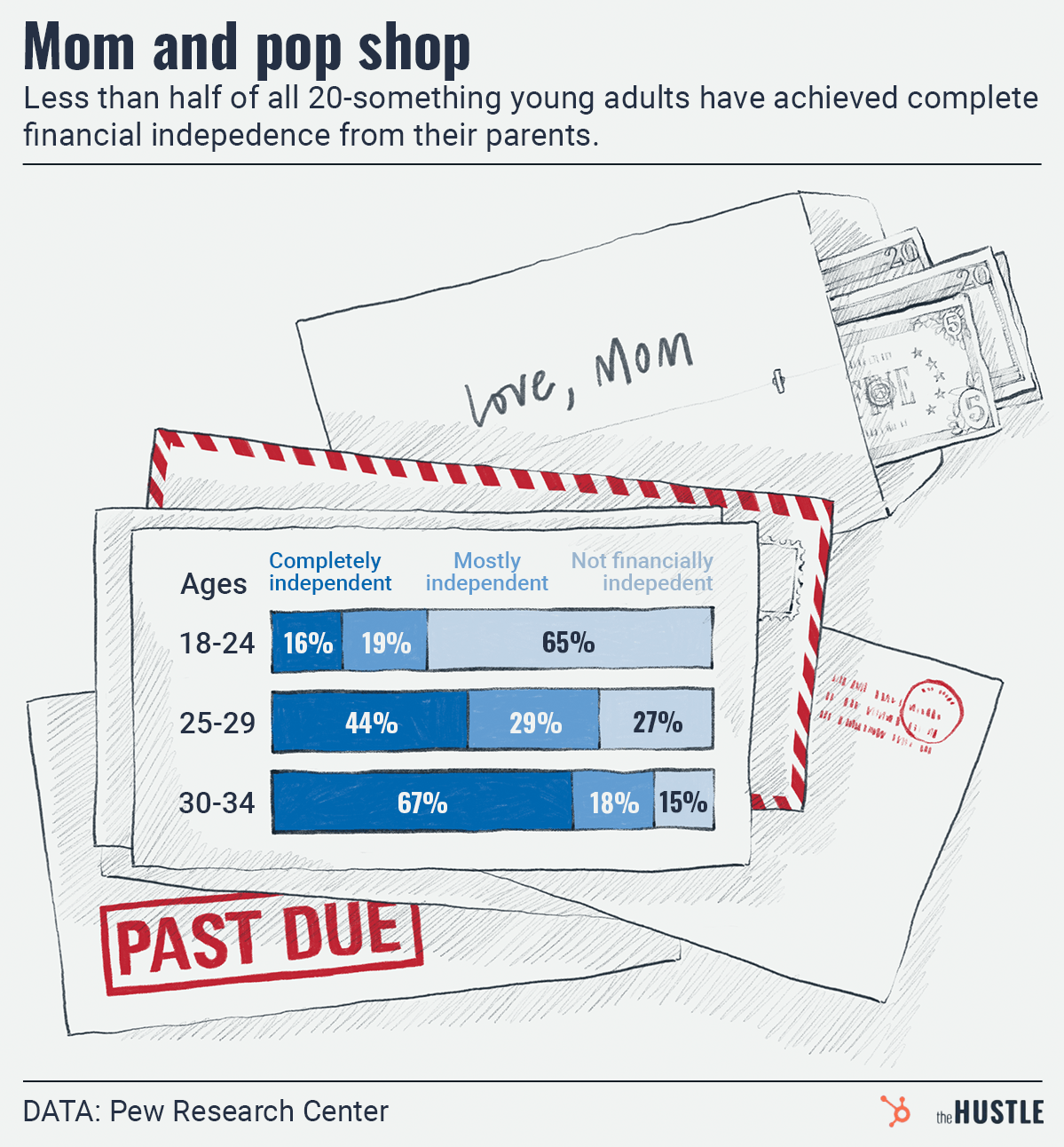
The majority of under-30 Americans lack total financial independence from their parents. Just 16% of adults ages 18-24 are entirely off their parents’ payroll. That number goes up to 44% for those ages 25-29.
While most young adults (67%) achieve full independence by their early 30s, nearly one-third of adults ages 30-34 still receive parental help.
Household expenses, phone bills, and streaming subscriptions are the most common chip-ins. Despite the horror show that is rent and mortgage, only 17% of adults ages 18-34 get help making those payments.
That said, the number of young adults living with their parents has increased: 57% of American adults under age 25 share an address with a parent, up from 53% in 1993.
The “why” behind all of this isn’t hard to find. For starters, inflation has been extra painful for young Americans, and the housing market increasingly favors the old.
What are parents saying?
Fifty-nine percent of parents reported financially assisting their adult children over the past year — and many aren’t blinking much of an eye at it.
Of those parents, 64% said giving support did little or no damage to their own personal finances.
They think it’ll be temporary: 72% of parents believe their adult kids will cut the “financial umbilical cord” eventually.
It isn’t just a one-way street, BTW: Parents giving help is far more common, but 33% of adults ages 18-34 say they’ve financially supported their parents in the past year. (Only 14% of parents acknowledged receiving help, though. Hm.)
FIT THE BILL
There are thousands of companies valued at $1B+. How many clues do you need to identify today’s billion-dollar brand?
Clue 1: Its brand name, representing the small city in which its founders were born and the company was chartered, has stayed the same since its founding in 1857.
Clue 2: Let’s get gaudy with the numbers for a second: It has 166m customers and manages $1.9T+ in total assets.
Clue 3: In addition to being one of the world’s top 20 banking institutions, it is known to sports fans worldwide as a prominent soccer and Formula One racing sponsor.
👇 Scroll to the bottom for the answer 👇
By the Numbers
Digits: A rare cicada event, pricey toys, and more
A banner year for cicadas, disturbing AI trends, and more.
2024-01-29T00:00:00Z
Juliet Bennett Rylah
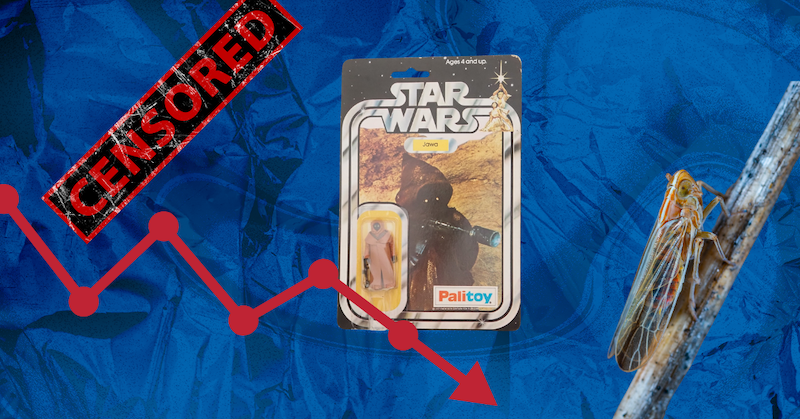
~$26.7k: The hammer price of a rare Star Wars toy. Made by Palitoy in 1978, the Jawa figure is believed to be one of 10-15 such toys in existence. The vendor once worked at Marvel UK and was gifted a number of Palitoy figures, including another Jawa toy that previously nabbed ~$33.9k at auction. We wish we had that kind of luck.
45m:Views an explicit AI-generated image of Taylor Swift received during the 17 hours it remained on X. The bogus images reportedly originated in a Telegram group where users were able to bypass Microsoft’s text-to-image generator’s protections against creating pornographic images. Microsoft is now investigating, X has disabled search results for the singer’s name, and the incident has reignited concerns around nonconsensual and explicit AI-generated content.
1T+: Number of cicadas that could emerge in the US this year thanks to Brood XIX and Brood XIII, which emerge from underground every 13 and 17 years, respectively. The last time this happened was in 1803, and it won’t happen again until 2245.
25%: How much investment banking bonuses dropped for work completed in 2023, per Wall Street consultancy Johnson Associates. This follows a disappointing 2022, but a great 2021 in which business was up and other expenses had dropped due to the pandemic. Now, as one expert put it: “Flat is the new up, and that’s if you had a solid year.”
AROUND THE WEB
🐦⬛ On this day: In 1845, Edgar Allan Poe’s “The Raven” was published in the New York Evening Mirror.
☕ That’s interesting: Ever notice how nearly every coffeehouse or coworking space looks the same? Blame the algorithm.
😢 That’s cool: Cry Once a Week provides touching tear-jerker videos for stress relief purposes.
🥝 Useful: StillTasty helps you figure out if something in your fridge is still good or needs to go in the trash.
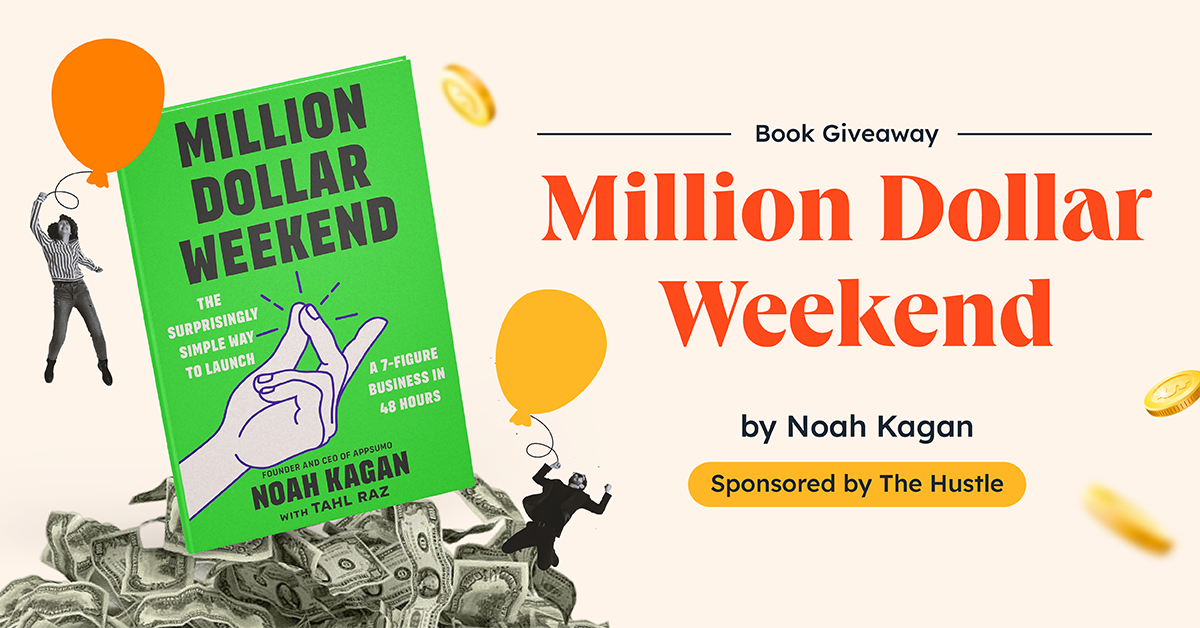
How about a trade: help us reach world domination, and we’ll ship you a fresh physical copy of Noah Kagan’s new book, Million Dollar Weekend.
Refer 5 friends to our newsletter using your special link below by Jan. 30th and you’ll receive the AppSumo founder’s blueprint for scaling a 7-figure startup.