Flying in winter sucks — inevitable weather delays, more turbulence, that one minute you walk on a freezing jetway bridge without your coat on. Perhaps one part will get better, though: Waiting for your plane to be sprayed with hot de-icing chemicals could be on the outs. Startup De-Ice may have cracked the code with a new induction stove-like system that runs currents through thin strips of tape attached to the plane’s exterior. Air Canada will trial it this winter.
In today’s email:
Your new BFF: Is a robot?
Poinsettias: The twisted tale behind the holidays’ favorite plant.
DNA storage: Hard drives and the cloud are going out of style.
Around the web: Better coffee, beautiful architecture, a quick break, and more.
👇 Listen: Throwing robots at the loneliness epidemic is worth a shot.
The Big Idea
Can robots help cure loneliness?
Can robot companions help alleviate loneliness?
2023-12-14T00:00:00Z
Juliet Bennett Rylah
In Philip K. Dick’s Do Androids Dream of Electric Sheep?, a nuclear war eliminates most of the world’s animals, leaving authentic pets to only the wealthiest humans. Everyone else finds companionship among robot pets; protagonist Rick Deckard ends up with a robot toad.
IRL, over half of US adults report experiencing feelings of isolation, which can have health consequences including an increased risk of heart disease, stroke, and dementia. Among older Americans, who are more prone to loneliness, loneliness costs Medicare an estimated $6.7B annually.
Are robot buddies the answer?
Meet ElliQ
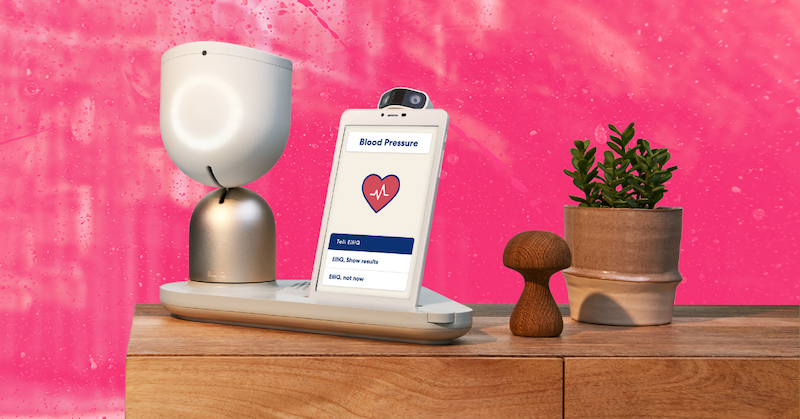
Intuition Robotics’ companion robot, ElliQ, is perhaps not as cute as a robot toad, but considering its minimalist design was inspired by Pixar, it’s pretty cute, with a light-up head that swivels and talks.
The New York State Office for the Aging partnered with Intuition Robotics to give 800+ local seniors an ElliQ, perArs Technica.
It can:
Provide reminders and prompts
Hold a conversation
Read audiobooks
Offer both physical and stress-reduction exercises, and cognitive games
Useful, but does it fix loneliness?
Results are mixed thus far.
New York’s efforts found that 50% of ElliQ owners used it for companionship, with 96% reporting it was helpful at reducing loneliness.
But another study found some seniors thought ElliQ’s tone was rude and that it was intrusive. One thought they might be so annoyed by ElliQ that they’d attack it with an ax.
Perhaps unsurprisingly, many are reluctant to call a machine a friend, but it’s not unheard of: We tend to project human traits onto inanimate objects — a phenomenon known as the Eliza effect — and can develop empathy for machines.
It’s quite possible that one day we’ll all have a little robot friend. And yes, I would like mine to look like a toad.
BTW: In 2021, a senior who’d been gifted a robot cat by her county’s department of aging toldThe New Yorker that while she knew it was a robot, its meows, purrs, and movements made it feel real. So, maybe the key really is the robot pet thing?
Free Resource
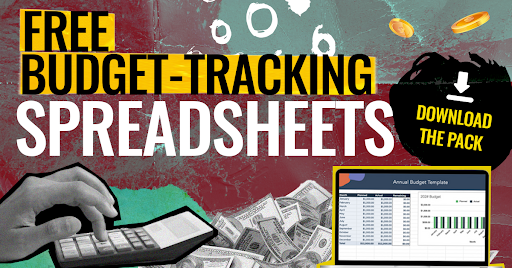
6 templates for bodacious budgeting
You may not have tables of money, but you should definitely have tables for money.
We won’t pretend that spreadsheets alone will quell your shopaholic habits, but they’re a solid place to start. Plus, these templates also work well for events, programs, and more.
They tried: In Colorado, thefts under $2k are misdemeanors. Thus, two men convicted of stealing $2,094.98 in shoes, clothes, and KitchenAid appliances from a Colorado Kohl’s argued their charges should be reduced from felonies as some of those items were actually on sale. Prosecutors countered that sales are only for paying customers.
SNIPPETS
Tesla is recalling 2m+ vehicles — nearly all its US cars — to update software and limit the use of Autopilot. The update will send Tesla drivers more frequent notifications when the Autosteer function is turned on to ensure they’re paying attention.
Netflix’s first engagement report revealed its most-watched show from January to June 2023 was “The Night Agent: Season 1.” Netflix will now drop this report every six months.
The times they are a-changin’:The New York Timescreated a new newsroom position this week — editorial director of artificial intelligence initiatives. Zach Seward, founding editor of Quartz, will be the first to tackle how AI will play a role for the publication.
Shamaine Daniels, a Democrat running for Congress in Pennsylvania, is using Ashley, an AI chatbot, to call voters. Daniels’ campaign claims Ashley will stop the exploitation of human phone bankers, who make an average of $27k-$43k/year.
TikTok is the first non-game mobile app to generate $10B in consumer spending. The spending largely comes from app users purchasing “coins,” which are used to buy gifts for the platform’s creators.
Japanese fashion retailer Uniqlo will open 20+ new locations across the US and Canada in 2024, with the goal of 200 North American stores by 2027. It currently has 72.
Etsy is the latest to announce layoffs right before the holidays, cutting 11% of its workforce. The ecommerce platform for artisans is facing declining sales and increased international competition.
Ikeasupersized its famous meatballs for a UK giveaway, planning to dole out the massive, “turkey-sized” meatballs to 30 “lucky” winners. Hard pass.
Don't miss this...
Content makes the world go ’round (at least for marketers), but it can’t create itself. This week we’re exploring the top creator economy predictions for 2024 that marketers need to know.
WATCH
How the poinsettia took over Christmas
The poinsettia plant is a ubiquitous Christmas staple.
Every year, just after Thanksgiving, it emerges en masse at nurseries, big-box retailers, fundraisers, and holiday parties.
It’s one of the most popular plants in the world, with annual sales of ~90m units and a global retail impact of nearly $1B.
But behind the beautiful, blood-red bracts of the poinsettia, there’s a story rife with geopolitics, patent wars, a dethroned monopoly, and complex supply chains.
How did this Mexican shrub become America’s bestselling holiday plant?
Forget the cloud, save your files to a strand of DNA
The next frontier for data storage might be in our genes.
2023-12-14T00:00:00Z
Sara Friedman
We can see tech’s evolution in the ways we store our data: floppy disks, CDs, hard drives, the cloud — and whatever’s coming next.
But what if we told you what’s next is already here… and it’s DNA?
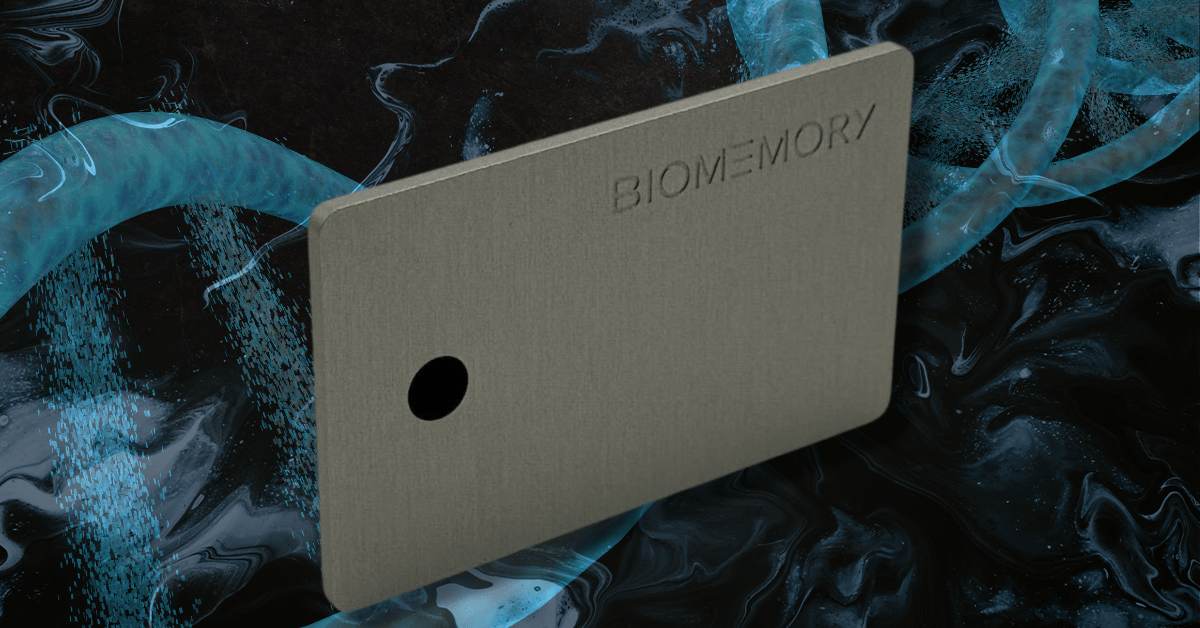
Yes, we’re talking about the stuff in your body that makes you, you. French startup Biomemory is leading the charge on turning it into storage, perWired:
To store data, users input text via Biomemory’s website where it’s converted from binary code (zeros and ones) to DNA code (A’s, C’s, G’s, and T’s). Then, Biomemory constructs a DNA strand using the custom sequence.
The strand is synthesized in solution, dried to increase shelf life, and sealed inside a chip in a silver card.
It costs $1k for two cards, and each card can hold one kilobyte of text data (about half a page) and should last ~150 years.
That last part is pretty cool considering hard drives last about five years and flash drives ~10.
When customers are ready to access their data, they’ll mail in one of their cards to be opened and rehydrated before it’s read by a sequencing machine.
The DNA code sequence is then mailed back to the customer, who can translate it into text using the company’s website.
Wild, right?
We think so. It also comes with several perks:
DNA is compact: Research suggests a single gram of DNA can hold ~36m copies of Avengers: Endgame.
Global data creation is on track to outpace the amount of available storage space, and DNA could open up a new reserve.
Plus, DNA data storage could have a big environmental impact. Hard drives in data centers account for ~1.5% of the world’s electricity consumption; DNA storage requires no energy until retrieval.
Other companies, like Microsoft and Twist Bioscience, are working on DNA storage, too, and have already stored whole songs and music videos.
While it’s not very practical (yet), it could be an option for sentimental, important information you want to keep safe.
Like that cookie recipe from your grandma your siblings keep trying to steal.
AROUND THE WEB
✈️ On this day: In 1903, brothers Orville and Wilbur Wright attempted the first flight of their Flyer aircraft. It made it a few feet before crashing.