We seem to remember locations even if other parts of our memory fade. Plus: how to take control of your dreams to boost learning and creativity.
New Scientist's The Daily Newsletter

Received this from a friend?
Sign up now to get every issue direct to your inbox each weekday


We seem to remember locations even if other parts of our memory fade. Plus: how to take control of your dreams to boost learning and creativity.


Like what you see? Subscribe today to gain unlimited access to all our subscriber only content.

Subscribe now

 
Image links to story

Gary Yeowell/Digital Vision/Getty Images


Lasting memories

Our memory for the who, what and why of a situation appears to fade over time, but we may be better at remembering where it took place. Understanding how memories can change could have implications for how we judge eyewitness testimonies in criminal cases. To explore this, Wilma Bainbridge and her colleagues at the University of Chicago carried out two experiments, asking volunteers to look at pictures and then draw them from memory some time later. The team was surprised to find that while the participants didn’t correctly remember all the objects within the scenes, of those that they did remember, they could correctly locate them within the images. Read more

Space power

The first experiment to transmit power to Earth from space could lead to a space-based solar power station within 10 years, according to one of the researchers involved. Ali Hajimiri at the California Institute of Technology and his colleagues launched the Microwave Array Power Transfer LEO Experiment (MAPLE) to space in January 2023. Two months later, they successfully beamed the first power to Earth, after which they ran the experiment for a further eight months. The team found that MAPLE could send 100 milliwatts of power through space and quickly refocus the beam to new locations, but they received only 1 milliwatt on the ground each time. Read more


New Scientist subscriptions

The pursuit of the ultimate truth. Image links to offer.

Get instant access to our coverage of the latest scientific breakthroughs, including physicists’ efforts to find a single framework that describes the whole of reality – particles, forces and all.

Subscribe now
 

More headlines

  • Ape humour: Bonobos, orangutans, gorillas and chimpanzees all poke, tickle and even steal from their peers as a form of playful teasing. 


  • Navigation aid: Two wayfinding apps use motion sensors and AI to help people who are blind navigate a building with a phone in their pocket.


  • Quantum quirk: Carbon dioxide is uniquely suited to cause global warming because of a peculiar phenomenon called Fermi resonance.


  • Shark smile: Seven per cent of pet dogs – mostly small, “toy” breeds – have doubled-up teeth, reminiscent of sharks’ mouths.  


Long read: Dream weavers

Image links to story

DongQiu

You’ve heard of lucid dreaming, where some people can become aware of their dreams and learn to direct the action. But what if we could all control our sleeping world and use those unconscious hours to our advantage? That is the aim of the dream engineers. By manipulating people’s dreams, they have been able to promote learning, boost creativity, improve the quality of sleep, banish nightmares and more. Now, they are developing technologies that will allow us all to do this for ourselves at home. It sounds like a dream come true – but there is also a dark side. Read more

 
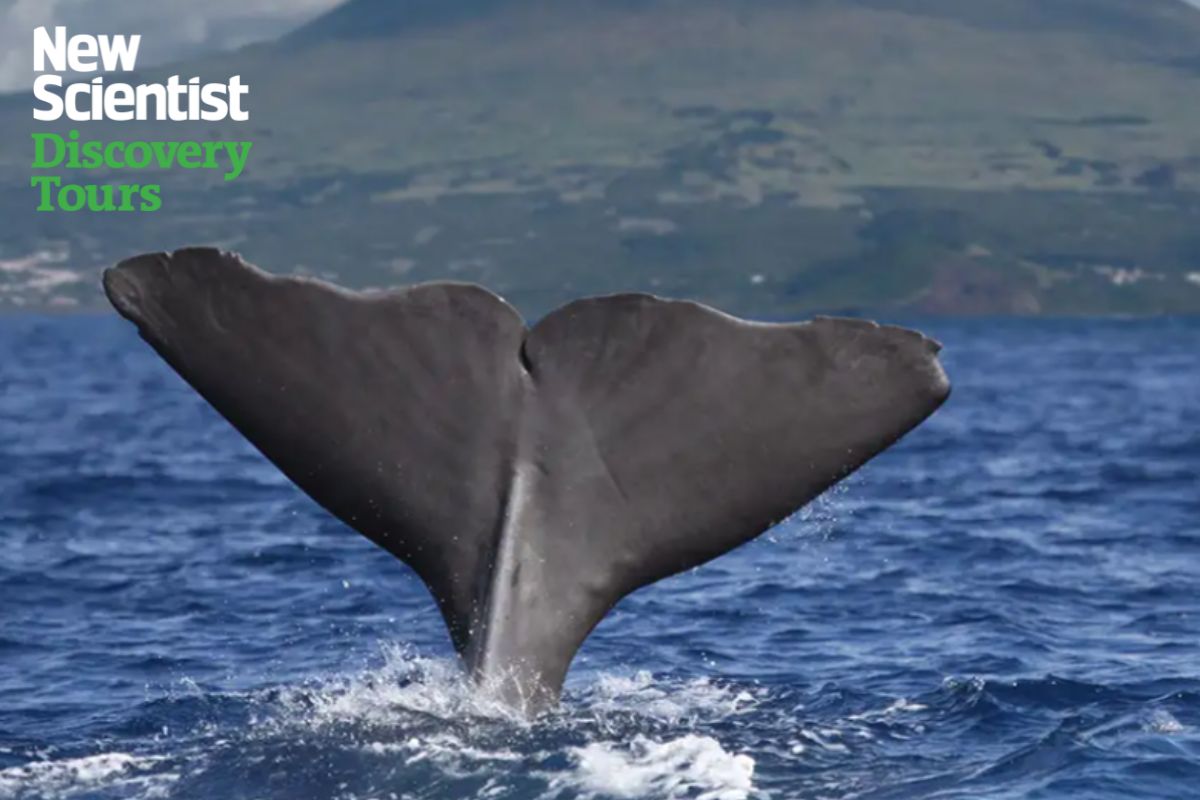
Whale watching in the Azores. Image links to tour.

Whale watching and marine ecosystems in the Azores Islands: Portugal

7 May 2024 | 7 days

Experience the hidden paradise of the richly biodiverse Azores islands, their lush flora and fauna, volcanic craters, lagoons and picturesque towns. This is a rare opportunity to actively take part in whale research and get an opportunity to watch the social interactions of whales as they descend into the water. 

Find out more
 

“These really are potentially the smallest extant frogs in the world, which is astonishing.” 

Mark Scherz at the Natural History Museum of Denmark in Copenhagen on the flea toad Brachycephalus pulex, adults of which are 7 millimetres long on average.


That's all for today. Thanks for reading.

Sam Wong

Assistant news editor, New Scientist
Email me at newsletter@newscientist.com

Received this from a friend? Sign up here

For the latest science and technology news, in-depth articles and video, visit newscientist.com


Facebook TwitterInstagramLinkedIn TikTok

Update preferences  |  Help  |  Contact us

View in browser

This email has been sent to subscriber@example.com. 
 Unsubscribe from the Daily newsletter

Do not reply directly to this email. If you have an enquiry, please contact us using the relevant contact details listed here.

Copyright © New Scientist Ltd


Registered Office: Northcliffe House, 2 Derry Street, London, W8 5TT
Registered in England. No.10644366
Australian mailing address: PO Box 2315, Strawberry Hills, NSW 2012, Australia
Registered in Australia. ABN 22 621 413 170


Privacy Policy  |  Terms & Conditions