Drone footage captured a great white shark pup, probably just hours old. Plus: contaminated hormone injections may have given five people Alzheimer’s. |
|
|
Like what you see? Subscribe today to gain unlimited access to all our subscriber only content. |
|
|
Carlos Gauna/The Malibu Artist |
|
|
A newborn great white shark may have been spotted in the wild for the first time. Although great whites are found around the world, very little is known about where and how they give birth. Wildlife film-maker Carlos Gauna and Phillip Sternes from the University of California, Riverside, were filming with a drone off Santa Barbara on California’s coast when they saw a 1.5-metre-long, entirely white shark. This caught their eye, not just because it was much smaller than adult great white sharks (
Carcharodon carcharias), but because these are normally grey on top, despite their name, and white underneath. They also noticed it was shedding something from its skin - probably its embryonic layer, something that has never been observed before. See the image |
|
|
Transmissible Alzheimer’s |
Five people appear to have developed Alzheimer’s disease after receiving growth hormones from deceased donors’ brains as children. Although based on a small group of people, this suggests that the condition could theoretically be transmitted during medical procedures. However, measures are in place to prevent this. One expert has also pointed out that this study doesn’t definitively prove that these recipients developed Alzheimer’s in this way. “There is no suggestion that Alzheimer’s disease can be transmitted between people during close contact, or by caring for people with Alzheimer’s disease, or via routine medical care,” says Gargi Banerjee at University College London. Read more
|
|
|
New Scientist subscriptions |
|
|
| The breathtaking advances in artificial intelligence and a growing urgency to find climate change solutions are set to dominate headlines in 2024. Stay ahead with New Scientist for just $1.50 a week and let us guide you through the coming year.
|
|
|
Long read: Blood sugar monitoring |
|
|
You may have seen them – a curious white disc stuck to the upper arm. These are continuous glucose monitors, which give an instant read-out of our blood sugar level. Invented to make life easier for people with diabetes, some companies now offer them to people without the condition as part of a programme of personalised nutrition, seeing them as a guide to the foods they should eat for optimum health. The idea is to reduce the glucose “spikes” that happen after eating, as this will, the story goes, help with weight loss, while boosting mood and sleep. So, what do we know about the health effects of glucose spikes? And is monitoring them a good idea for everyone? Read more
|
|
|
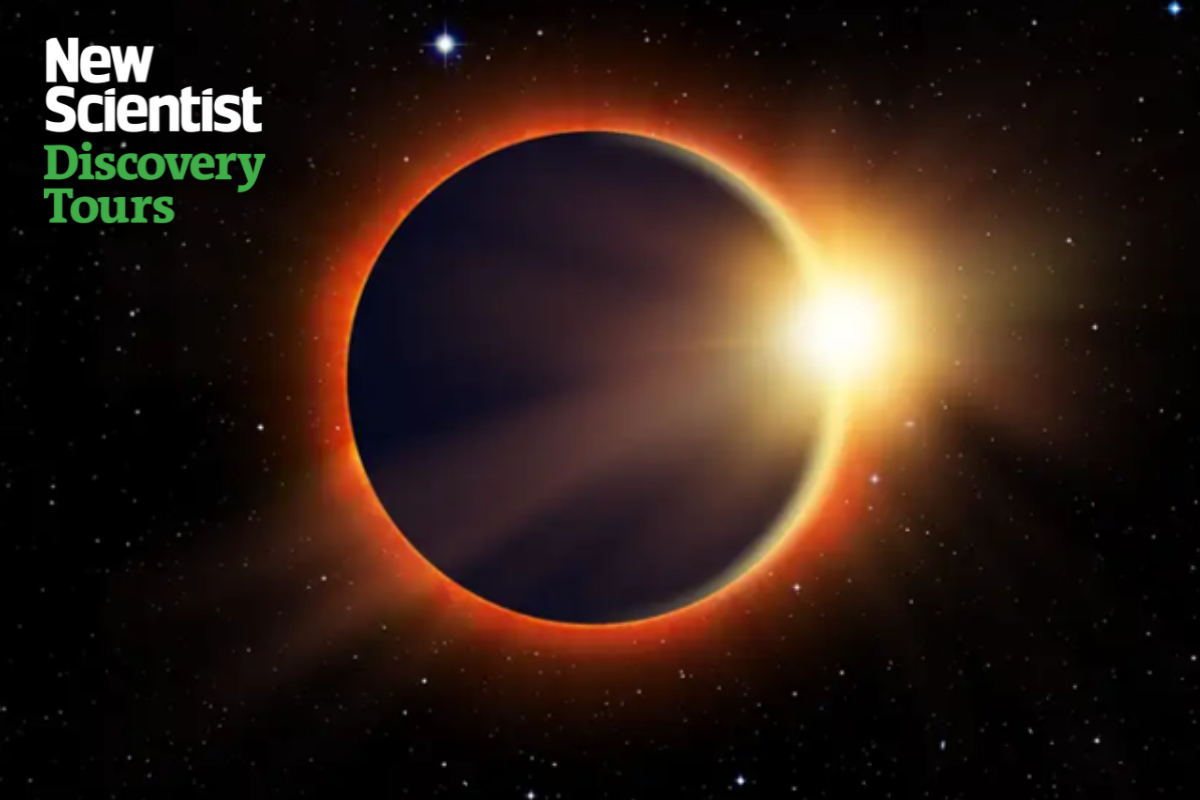
| Total Solar Eclipse 2024: San Antonio to San Marcos, Texas: USA 6 April 2024 | 7 days |
This once-in-a-lifetime tour offers you the opportunity to deepen your understanding of the universe and witness one of nature's most magnificent event, a rare total eclipse of the sun taking place across north and central America on 8 April 2024. |
|
|
"We think this is just the beginning and graphene is here to stay." |
|
|
This email has been sent to subscriber@example.com.
Unsubscribe from the Daily newsletter |
Do not reply directly to this email. If you have an enquiry, please contact us using the relevant contact details listed here. |
Copyright © New Scientist Ltd
Registered Office: Northcliffe House, 2 Derry Street, London, W8 5TT
Registered in England. No.10644366
Australian mailing address: PO Box 2315, Strawberry Hills, NSW 2012, Australia
Registered in Australia. ABN 22 621 413 170
Privacy Policy | Terms & Conditions |
|
|
|
|
|
|