Tree-planting projects in Africa may introduce too much shade. Plus: when does a bone become a fossil?
|
|
|
Like what you see? Subscribe today to gain unlimited access to all our subscriber only content. |
|
|
Barking up the wrong tree |
Ambitious tree-planting projects that aim to restore forests in Africa could inadvertently harm grasslands and savannahs by introducing too much shade. This may prevent smaller plants from photosynthesising, which would have knock-on effects for the rest of the ecosystem. Researchers compared the size of areas committed for forest restoration in 34 African countries to areas that are naturally forest habitats. For 18 of the countries, they found that the pledged area exceeds the actual forest area, so non-forest habitats must be included within the pledged regions. “Individually, trees are great, but when you have a lot of them together, they can really change an ecosystem,” says Kate Parr at the University of Liverpool in the UK.
Read more |
|
|
You’ll often read stories about new hominin remains in which they are described as fossils, writes Michael Marshall. Fossils take a long time to form, so how old does a human bone or tooth need to be before it counts as a fossil? Should we be hurling this word around with such gleeful abandon? This all seems to hinge on two primary questions: what conditions is a specimen deposited in and what do we actually mean when we say “fossil”? Read more |
|
|
New Scientist subscriptions |
|
|
| Get instant access to our coverage of the latest scientific breakthroughs,
including physicists’ efforts to find a single framework that describes the whole of reality – particles, forces and all. |
|
|
Comment: There aren’t five love languages |
|
|
Gary Chapman first published The Five Love Languages
in 1992, based on his experience as a Southern Baptist pastor counselling couples, write psychologists there Impett, Haeyoung Gideon Park and Amy Muise. He determined there are five love languages: physical touch, words of affirmation, acts of service, quality time and gifts. Sceptical, the team published a review of the scientific studies on love languages, none of which convincingly supported Chapman’s claims. What the science of love reveals is that if love were a language, we would all need to be multilingual.
Read more |
|
|
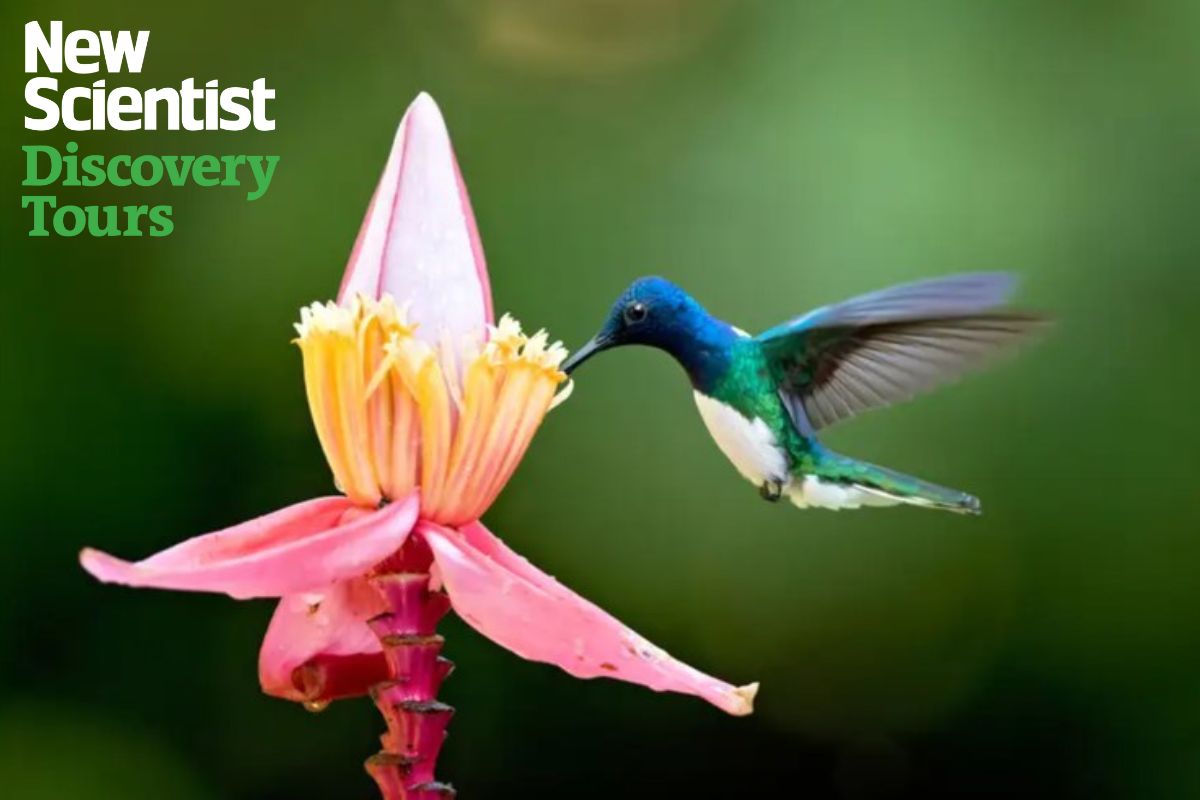
| In the footsteps of Alexander von Humboldt: Ecuador 16 August 2024 | 11 days |
Explore Ecuador's stunning natural wonders, including the Amazon and Cloud Forest, and follow in the footsteps of ecologist Alexander von Humboldt. |
|
|
“This is the special sauce.” |
|
|
This week on the podcast, the team discusses how a chemical cocktail partly restored vision in blind mice. Plus, hear about how great apes tease each other and the microbes that may make your cup of tea taste better.
Available on Spotify, Apple and more.
|
|
|
This email has been sent to subscriber@example.com.
Unsubscribe from the Daily newsletter |
Do not reply directly to this email. If you have an enquiry, please contact us using the relevant contact details listed here. |
Copyright © New Scientist Ltd
Registered Office: Northcliffe House, 2 Derry Street, London, W8 5TT
Registered in England. No.10644366
Australian mailing address: PO Box 2315, Strawberry Hills, NSW 2012, Australia
Registered in Australia. ABN 22 621 413 170
Privacy Policy | Terms & Conditions |
|
|
|
|
|
|