Before being shut down, the UK's JET reactor set a world record for the energy output of a fusion reaction. Plus: enormous underwater mountains discovered off the west coast of the Americas. |
|
|
Like what you see? Subscribe today to gain unlimited access to all our subscriber only content. |
|
|
The UK’s 40-year-old fusion reactor achieved a world record for energy output in its final runs before being shut down for good, scientists have announced. The Joint European Torus (JET) in Oxfordshire began operating in 1983. The reactor’s previous record was a reaction lasting for 5 seconds in 2021, producing 59 megajoules of heat energy. But in its final tests in late 2023, it surpassed this by sustaining a reaction for 5.2 seconds while also reaching 69 megajoules of output, using just 0.2 milligrams of fuel. This equates to a power output of 12.5 megawatts – enough to power 12,000 homes, said Mikhail Maslov of the UK Atomic Energy Authority at a press conference yesterday. Read more |
|
|
Mysterious marine mountains |
Four underwater mountains have been discovered in the high seas off the west coast of South and Central America. “The tallest is over one-and-a-half miles in height, and we didn’t really know it was there,” says Jyotika Virmani at the Schmidt Ocean Institute in California. Virmani’s team on the exploration vessel Falkor (too) came across them in January, while navigating from Costa Rica to Chile. The satellites they were using to plan the route spotted areas in the ocean where the gravitational pull was a little stronger than usual because of the possible presence of excess mass. Using a special kind of sonar, the researchers identified four seamounts – underwater mountains – ranging in height from about 1591 to 2681 metres. Read more |
|
|
New Scientist subscriptions |
|
|
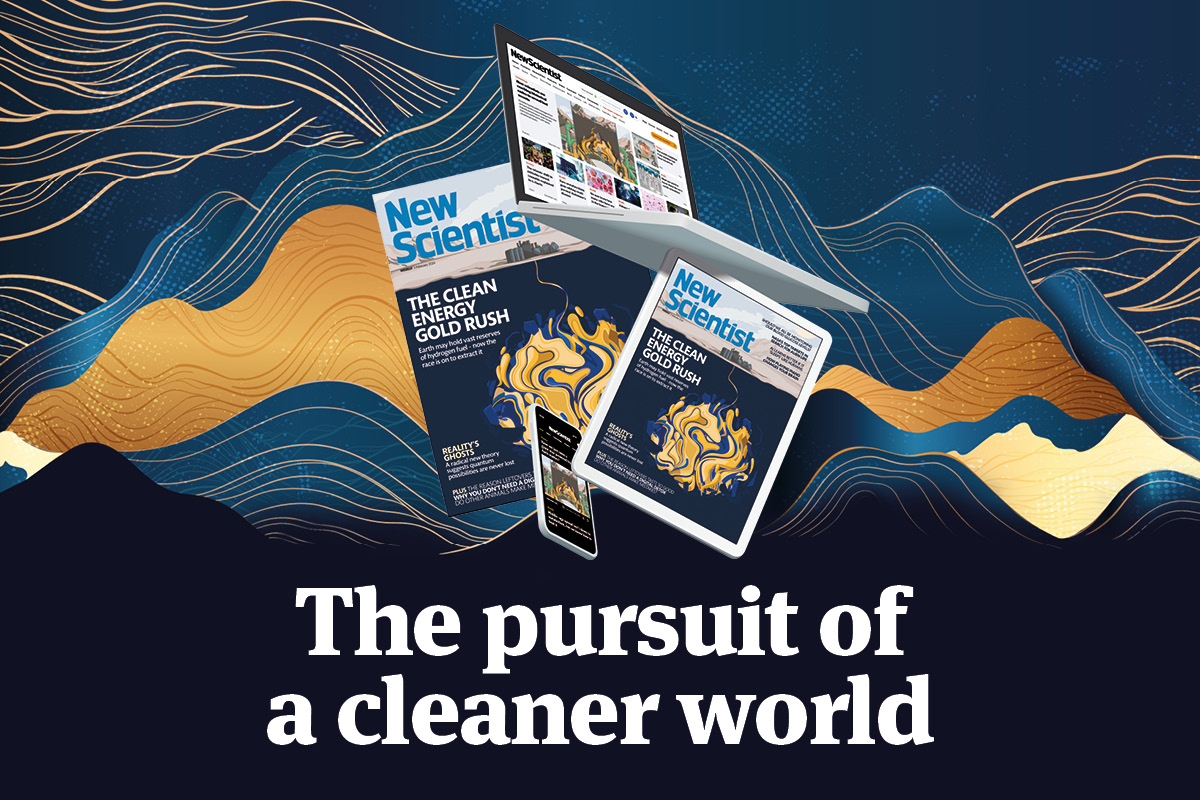
| Get access to our expert coverage of the latest breakthroughs in science, including the search for a clean wonder-fuel that could speed our path to net zero. |
|
|
Comment: Reasons not to WFH |
|
|
For most of us, lockdown is now just a dim memory, writes evolutionary psychologist Robin Dunbar. There has, however, been one lasting effect: hybrid work patterns. The stresses of the daily commute are no more; in its place, we have more time with the children, at the gym or shopping. It is a boon for working parents. This marks a sea change from past work practices. But has it really been the win-win situation some CEOs have claimed? Overall, employees will be happier and more productive with more face-to-face contact, he says. Read more |
|
|
| In the footsteps of Alexander von Humboldt: Ecuador 16 August 2024 | 11 days |
Explore Ecuador's stunning natural wonders, including the Amazon and Cloud Forest, and follow in the footsteps of ecologist Alexander von Humboldt. |
|
|
“The bubbling is really, really intense. It’s like a Jacuzzi.” |
|
|
This week on the podcast, the team discusses how climate change may affect the fate of shipping in the Panama canal. Plus, hear about the new research on the relationship between microdosing LSD and complexity in your brain.
Available on Spotify, Apple and more.
|
|
|
This email has been sent to subscriber@example.com.
Unsubscribe from the Daily newsletter |
Do not reply directly to this email. If you have an enquiry, please contact us using the relevant contact details listed here. |
Copyright © New Scientist Ltd
Registered Office: Northcliffe House, 2 Derry Street, London, W8 5TT
Registered in England. No.10644366
Australian mailing address: PO Box 2315, Strawberry Hills, NSW 2012, Australia
Registered in Australia. ABN 22 621 413 170
Privacy Policy | Terms & Conditions |
|
|
|
|
|
|