Plus: Getting to the bottom of the Mediterranean diet
New Scientist's Health Check Newsletter

Received this from a friend?
Sign up now to get every issue direct to your inbox each week


Top health stories this week

Five people with ''Volunteer'' T-shirts talk in a group

Group activities may not be enjoyed by all

Nuva Frames/Shutterstock

Workplace well-being initiatives don’t boost mental health


Psychedelic drug helps treat PTSD and traumatic brain injuries


There can be 240,000 plastic particles in a litre bottle of water


Like what you see? Subscribe today to gain unlimited access to all our subscriber only content.

Subscribe now


Hi readers,


This week, I have been writing about the surprising evolutionary origins of multiple sclerosis (MS), an autoimmune condition caused by the immune system attacking the body’s nerves. It reminded me that there have recently been several promising studies that suggest our understanding of autoimmune conditions – and our ability to treat them – may be at a turning point.


It was only a few decades ago, in the mid-20th century, that doctors realised autoimmune conditions happen because the immune system, which ordinarily fights off pathogens such as bacteria and viruses, mistakenly attacks our own bodies.


These conditions vary markedly, depending on which bit of the body comes under fire. In type 1 diabetes, for instance, the insulin-making cells in the pancreas are destroyed, leaving people reliant on lifelong insulin injections, while in rheumatoid arthritis, the joints are affected.


The new findings about MS shed light on how autoimmunity may arise from evolutionary trade-offs that are necessary to keep the immune system as a defence mechanism that is constantly on alert – but not too alert.


Some of the genes that predispose people to MS have been found to have arisen in a population of nomadic livestock herders called the Yamnaya, who lived in parts of what we now call Ukraine, Romania and Bulgaria.


About 5000 years ago, the Yamnaya spread west through Europe, displacing or interbreeding with the people already living there. The MS genes grew more common in the Yamnaya and their descendants, probably because they helped people fight off the some of the bacteria and viruses common in livestock that people were being newly exposed to.


You can read more about that story here, or click here if you fancy a long read about the invasion of the Yamnaya. 

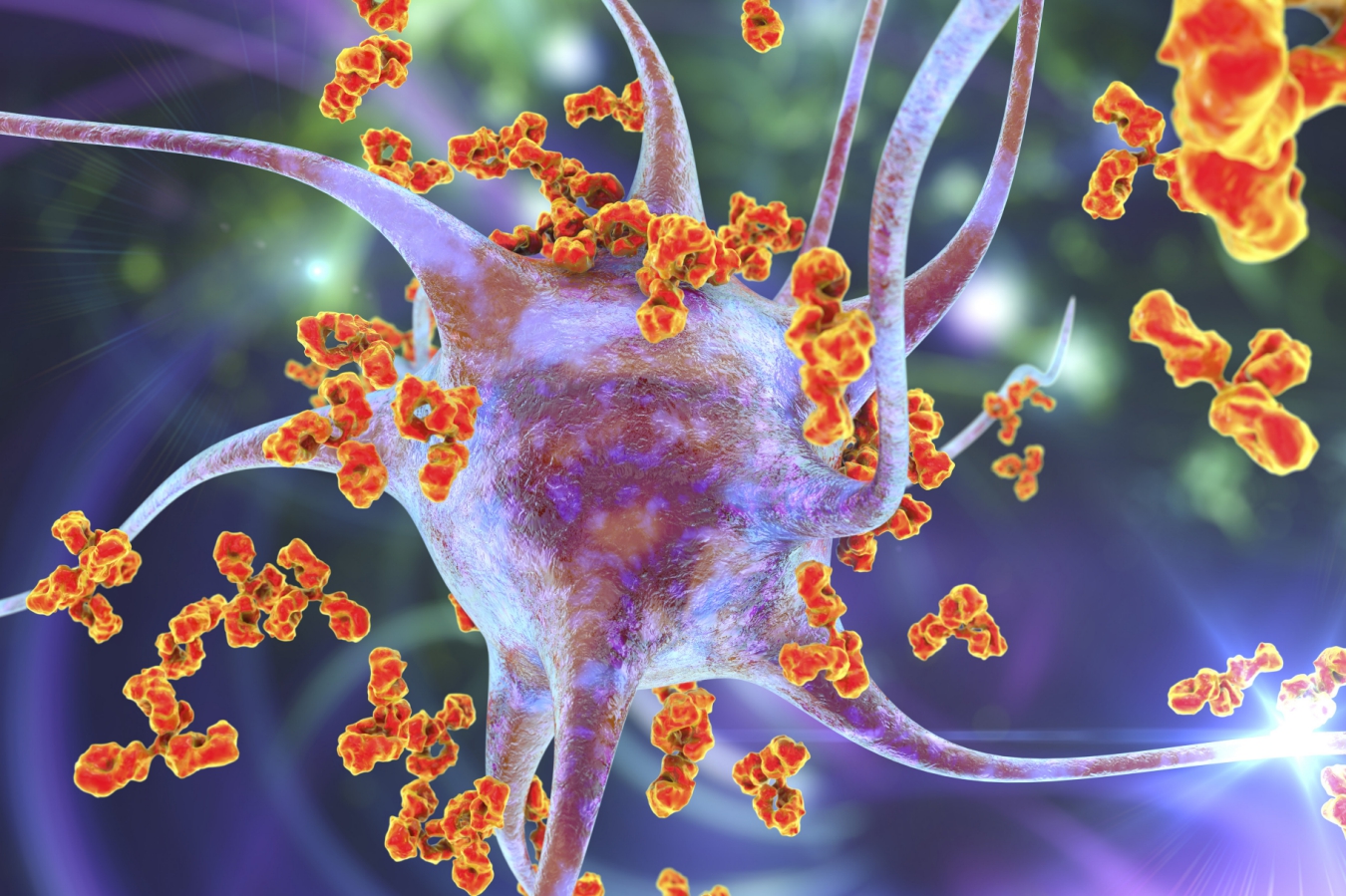
A nerve cell is surrounded by antibodies

In MS, antibodies target nerve cells

KATERYNA KON/SCIENCE PHOTO LIBRARY

For a long time, the only treatment options we had for autoimmune conditions were medicines that suppress the immune system, such as steroid drugs. These help many people live with conditions such as rheumatoid arthritis, but can have side effects, such as raising susceptibility to infections.


The ideal autoimmunity treatment would be more specific, deactivating only certain parts of the immune system or even just the immune cells that react against the person’s body. And in the past few years, there has been some progress on this front.


One radical approach, which has been used in MS, is to target B cells. These make up the branch of the immune system that creates antibodies – proteins that recognise specific molecules, such as thoseon bacteria.


In MS, we don’t know why someone’s B cells start attacking their nerves, but it may be because they have previously been infected with a virus that has some similar molecules to those on nerve cells.


The idea with the new treatment is to "reset” the person’s immune system by killing their B cells via chemotherapy drugs and then infusing them with a stored sample of their immune system stem cells, previously extracted from their bone marrow. Once returned to their body, the stem cells start producing healthy B cells that don’t attack nerves.


Another approach is being investigated for lupus, where the immune system reacts against people’s DNA, causing a range of debilitating symptoms, such as joint pain and rashes. Here, researchers are using CAR-T cells, where some of the person’s own immune cells are genetically tweaked so they target and destroy B cells.


Originally developed as a treatment for leukaemia, which occurs when B cells start multiplying out of control, CAR-T cells have shown promise in a small trial in lupus. And the developers says this could, in principle, be used for any autoimmune condition where B cells are the main problem.


To get an even more specific treatment, where the exact immune cells that are causing the damage are suppressed, we may need to develop more sophisticated therapies still. One experimental approach is to boost activity of a special kind of immune cell called T-reg cells, whose job is to turn down the immune attack.


This approach is being investigated in early-stage trials in Crohn’s disease, where the immune system attacks an unknown target in the gut.


If we can develop ways to turn off the immune response against specific molecules, it would be a huge medical advance and it could potentially be used in non-autoimmune conditions too. These would include preventing life-threatening allergic reactions – where people react against harmless compounds in food, for instance – and would mean people who have had organ transplants no longer need to take strong immunosuppressants for life.


This goal of creating immune tolerance to specific molecules is, in some ways, the opposite of another great medical breakthrough: vaccination. Vaccines, in contrast, let us activate the immune system against specific molecules. One thing’s for sure, whichever scientists discover a way to achieve immune tolerance would surely be in the running for a Nobel prize.


 
No fads, just facts. Image links to content.

Discover the health advice that will challenge how you think about your body and mind for good. From how many hours sleep you need to how many portions of fruit and vegetables you should eat - no fads, just facts, to see you through 2024 and beyond.

Read for free
 

The long read:  The Mediterranean diet

Bottles of olive oil and various other vegetable and nut oils

A Mediterranean diet is rich in olive oil

MurzikNata/Getty Images

When it comes to healthy diets, one of them has always had a “have-your-cake-and-eat-it” feel. For decades, we’ve been told that the secret to staying well is to enjoy the delicious fresh foods of the Mediterranean. Adding more tomatoes, focaccia and olive oil to your plate – and washing them down with a glass of chianti – is claimed to be a great way to reduce your odds of having a heart attack or developing type 2 diabetes.


But despite all this praise, figuring out what it is about the diet that leads to such benefits has been tricky. For starters, nutritionists can’t agree on the exact form it should take. And then there are factors such as eating as a family, cooking at home and other non-dietary elements that must be considered.


The good news is that over the past decade, we have begun to learn which components of the diet offer the biggest health benefits and why. This means we are closer than ever to offering the best advice on eating well, even for those who will never reside in the beautiful Mediterranean countryside themselves.


That’s all for this week. If you know someone who might enjoy this newsletter, please forward it to them. 

New Scientist health reporter Clare Wilson in a Christmas hat

Clare Wilson

Health reporter, New Scientist

Email me at healthcheck@newscientist.com
Follow me @clarewilsonmed

Received this from a friend? Sign up here

For the latest science and technology news, in-depth articles and video, visit newscientist.com


Facebook TwitterInstagramLinkedIn TikTok

Update preferences  |  Help  |  Contact us

View in browser

This email has been sent to subscriber@example.com. 
 Unsubscribe from the Health Check newsletter

Do not reply directly to this email. If you have an enquiry, please contact us using the relevant contact details listed here.

Copyright © New Scientist Ltd


Registered Office: Northcliffe House, 2 Derry Street, London, W8 5TT
Registered in England. No.10644366
Australian mailing address: PO Box 2315, Strawberry Hills, NSW 2012, Australia
Registered in Australia. ABN 22 621 413 170


Privacy Policy  |  Terms & Conditions