Hi there,
It’s a cold February evening and your electric car battery is running out of power. You pull off the motorway to the nearest services, but as you near the bank of rapid chargers your heart sinks: a snaking queue of electric vehicles stands between you and that precious plug point.
As EV sales soar, the battle for public charging points is becoming ever more intense. In the UK, there are about 18 EVs on the road per public charger, up from a 6-to-1 ratio in 2019, according to statistics compiled by Zapmap. In the US, the ratio of EVs per charger is 24 and rising, according to the International Energy Agency. What if there was a better way to rejuice your car? Perhaps you could pull up at a service station and, within minutes, simply swap out your empty battery for a fully charged one. That’s the topic under the microscope in this month’s Fix the Planet. But first... |
|
|
This month's top environment stories |
|
|
Jens Carsten Rosemann/Getty Images |
|
|
Atlantic current shutdown is a real danger, suggests simulation |
The most detailed computer model run so far shows that melting ice sheets could cause the collapse of the major ocean current that warms Europe, but it's still unclear how likely this is to happen. Read more |
|
|
A container ship just tested a system to capture its own CO2 emissions |
Shipping companies are experimenting with onboard carbon capture systems, but they face difficult trade-offs on energy and space for regular cargo. Read more |
|
|
Bacteria could help turn CO2 to rock under extreme conditions |
Microbes that rapidly convert CO2 to rock could lock away the greenhouse gas in deep underground storage sites, such as depleted oil and gas reservoirs. Read more |
|
|
Weekender: Science of the Jurassic Coast, Dorset and Devon, England
Discover the science of the Jurassic Coast, from the ever-changing landscapes to the future of beaches and geology, with insights from geologists, marine biologists and conservation experts. 17 - 19 May 2024
Find out more |
|
|
Battery swapping for electric vehicles isn’t a new idea. Tesla trialled the concept in 2014 at one of its Supercharger stations in California, but it pulled the plug on the project the following year, blaming a “very low take rate for the pack swap station”. Prior to that, US start-up Better Place trialled battery swapping in Israel in 2012, but the company filed for bankruptcy the following year after only convincing one car-maker – Renault – to come on board.
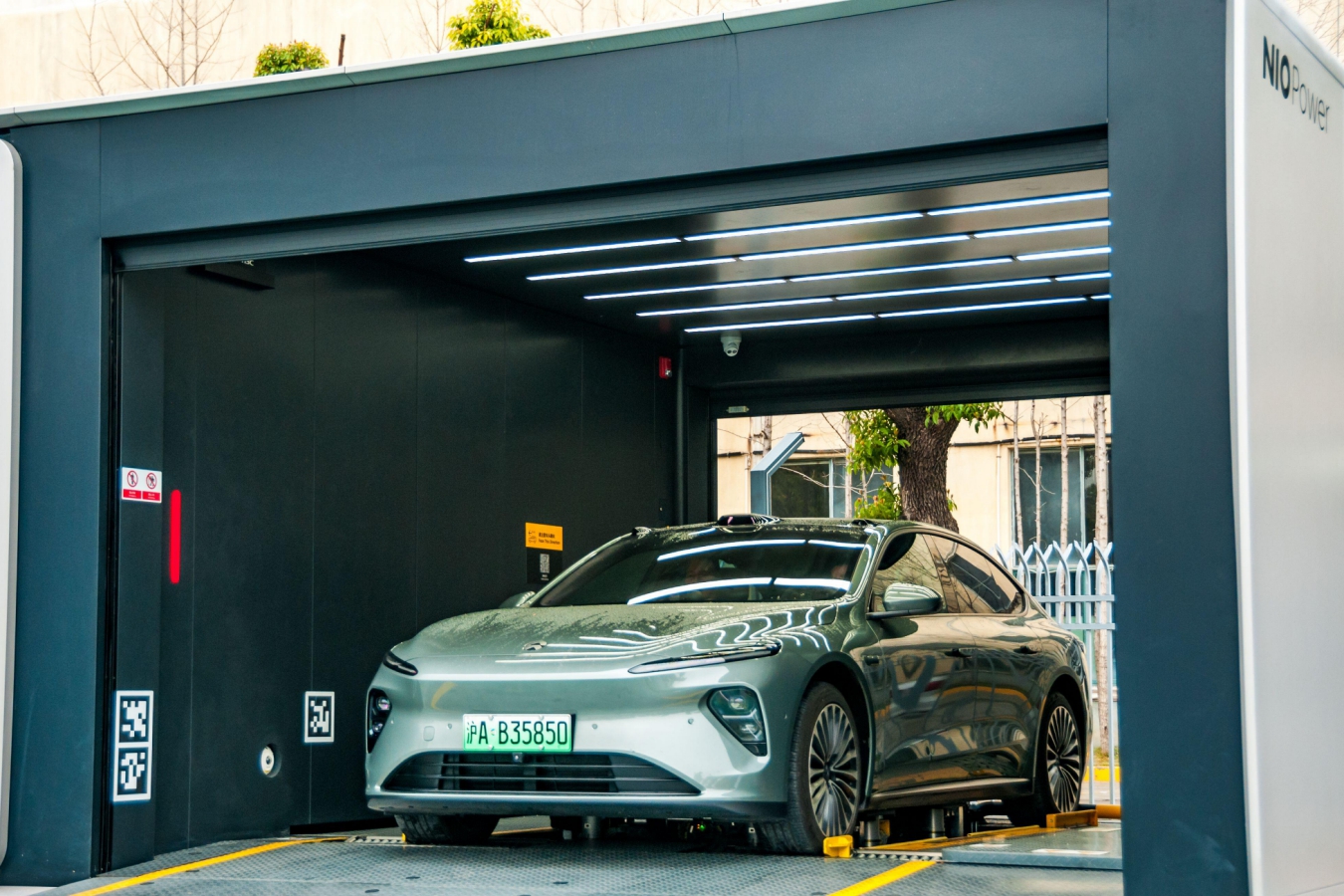
But could battery swapping be enjoying a resurgence? In Taiwan, a firm called Gogoro has a booming battery swap business for electric scooters. Riders pay a monthly subscription to access its network of 2500 swap stations, where they can exchange a depleted battery for a fully charged replacement. Gogoro is now moving to expand globally, launching battery swap networks in India last year and in Chile and Colombia in 2024. Meanwhile, the Chinese government has backed battery swapping with incentives including subsidies, and thousands of battery swapping stations are now up and running across the country, servicing everything from passenger cars to construction vehicles and buses. “In China, battery replacement is already more advanced because it has established itself as a good alternative for charging infrastructure, especially in megacities with limited parking space,” says Helena Wisbert at the Center Automotive Research in Duisburg, Germany. Chinese EV firm Nio, which already has 2000 power swap stations operating in China, is now building its business in Europe, opening dozens of stations across Norway, Denmark, Sweden and the Netherlands. It is expected to launch in the UK next year. |
|
|
A Nio power swap station in Shanghai |
|
|
In technical terms, designing a car with a swappable battery isn’t too challenging. Essentially, it turns the battery into a cartridge that can easily be pulled out and replaced with a fresh one.
Swappable batteries could bring several benefits. They should reduce the amount of time drivers have to wait around to recharge their cars, preserve battery health by avoiding the strain of repeated rapid charging and cut charging costs while making better use of renewable power. One 2023 study suggests swappable batteries could cut EV charging costs by almost one-quarter by charging batteries during off-peak hours using surplus power from renewable sources.
But this seemingly simple idea could be very tricky to scale up. Battery swap stations are expensive to build and would need to hold many expensive batteries in stock, says Wisbert. Then there is the problem of the batteries themselves: manufacturers make them in all shapes and sizes.
For battery swap stations to work commercially for passenger EVs, car-makers would need to agree to standardise the size and specifications of their batteries so that swap stations could service multiple brands at once. Given that companies rely on battery design and range as a major selling point for their EV models, it looks unlikely that they would be willing to relinquish control over their designs in this way. “The main barrier... is standardisation, compatibility and financial viability,” says Liana Cipcigan at Cardiff University, UK.
That’s why Cipcigan thinks battery swapping is most promising for fleets, where vehicles are interchangeable and batteries can be quickly swapped at depots. "A commercial fleet is operating the same type of vehicles, [with the] same battery model and size, so swapping the battery is convenient to achieve,” she says. “[Battery swap] is a complementary solution for EVs, mainly for commercial fleets, not a mainstream solution for charging EVs.”
Another reason why battery swap technology makes the most sense in fleets is geography. Commercial fleets often operate within a defined “service patch”, which would allow companies to run small clusters of swap stations in their local area rather than having to build out nationwide infrastructure. “This is how the roll-out in China and South Korea has evolved, around high-density urban areas,” points out Jonathan Smart, an automotive expert at UK law firm Shoosmiths.
Logistics companies are starting to put battery swapping to the test in this capacity. US start-up Ample signed a partnership with auto-maker Stellantis in December 2023 to deploy battery swapping technology in its car-sharing fleet Free2Move, initially in Madrid. Ample has also partnered with truck-maker Mitsubishi Fuso to trial battery swapping for trucks in Japan. |
|
|
Smart is among those who still believe battery swap technology could have a future in the passenger EV market, despite the logistical and financial challenges.
China’s Nio launched its “Battery as a Service” offer in 2020. Customers can buy a Nio EV without the battery for a discounted rate, and then pay a monthly subscription to access a compatible battery, as well as chargers and swap stations.
Nio says this solution, which it operates in China and Europe, can significantly cut the purchase cost of a new electric vehicle.
Nio has even had some success in joining forces with other manufacturers, so its battery swap technology can be used to replace batteries in other vehicle brands. In November, Chinese auto-makers Geely and Changan Automobile announced that they would work with Nio on developing battery swap services. “The integrated battery is the single most expensive component of many EVs,” Smart points out. Eliminating the cost of the battery from an EV’s purchase price would dramatically cut the upfront cost to consumers, particularly at the cheaper end of the market, he says. But battery swapping, particularly for passenger cars, might be running out of time to prove its worth. Around the world, researchers are working furiously to develop new batteries that can recharge in minutes. Meanwhile, public networks of ultra-rapid chargers grow by the day – an effort some car-makers have invested heavily in.
With more powerful batteries and plentiful fast chargers, the case for battery swap stations diminishes, says Wisbert. “The primary advantage of swapping is its time efficiency, but with the further development of fast-charging technology, this advantage is diminishing,” she says. |
|
|
| Get access to our expert coverage of the latest breakthroughs in science, including the search for a clean wonder-fuel that could speed our path to net zero. |
|
|
A Brooklyn start-up is making cleaner jet fuel from captured carbon dioxide and clean electricity. We had a peek inside their plant. Read more
Solar power arrays that float on water are becoming increasingly common in South-East Asia as the land available for the rapid expansion of renewable energy grows scarce. Read more
Aeroplanes could avoid forming planet-warming contrails by adjusting their altitude – in many cases, by just a few hundred metres. Read more -
A Chinese company is building wind turbines with 131-metre-long blades, the longest ever used in an onshore power plant. Read more
| |
|
This month's long read: The gold hydrogen rush |
|
|
Gilles and Cecilie Studio |
|
|
Hydrogen has long been touted as possible green replacement for fossil fuels. The only trouble is, making hydrogen is itself almost always produces a lot of greenhouse gases. Now, though, emerging evidence suggests that there could be vast quantities of natural hydrogen underground. Environment reporter James Dinneen travelled to Oman, the front lines of the rush for gold hydrogen, to distill what we know about how much of this precious resource there really is and how easy it will be to tap into. Read more
|
|
|
Thanks so much for being a loyal reader of Fix the Planet. Additional thanks this month must go to James, who has been penning this newsletter while I’ve been on maternity leave. I return to work in March, and I will probably have missed a fair few potential Fixes while caring for the babe, so do get in touch if you have spotted one you would like to see covered. You can email me on the address below. |
|
|
This email has been sent to subscriber@example.com.
Unsubscribe from the Fix the Planet newsletter |
Do not reply directly to this email. If you have an enquiry, please contact us using the relevant contact details listed here. |
Copyright © New Scientist Ltd
Registered Office: Northcliffe House, 2 Derry Street, London, W8 5TT
Registered in England. No.10644366
Australian mailing address: PO Box 2315, Strawberry Hills, NSW 2012, Australia
Registered in Australia. ABN 22 621 413 170
Privacy Policy | Terms & Conditions |
|
|
|
|
|
|