At the smallest scales, everything is made out of a cloud of quantum possibilities. A new idea attempts to explain how our everyday world comes from this, using the laws of thermodynamics. Read more |
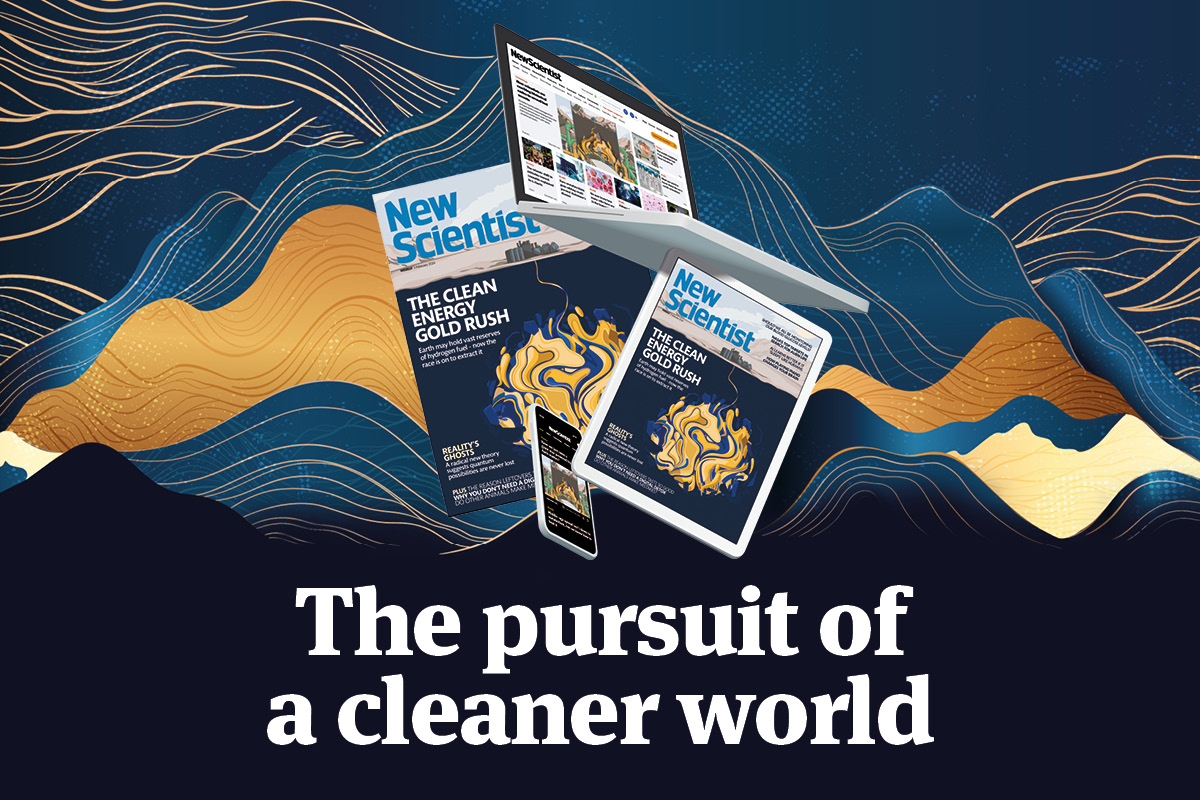
Prospectors around the world are scrambling to find reserves of "gold hydrogen", a naturally occurring fuel that burns without producing carbon dioxide. But how much is really out there and how easy is it to tap into? Read more |
| |
|
Like what you see? Subscribe today to gain unlimited access to all our subscriber only content. |
|
|
This week's top news stories |
|
|
UK HEALTH SECURITY AGENCY/SCIENCE PHOTO LIBRARY |
|
|
A previously unknown type of replicating agent named "obelisks” has been found in genomic data from stool samples – but we know little about what these entities do. Read more |
|
|
Elon Musk's Neuralink company is conducting its first human trials, implanting a tiny chip onto the surface of a person's brain to allow them to talk directly with computers. Read more |
|
|
Four-atom molecules glued together by microwaves have broken the record for being the most complicated molecule to reach temperatures just billionths of a degree away from absolute zero. Read more |
|
|
| Simon Reeve's ‘Wilderness’ In this episode of CultureLab, TV columnist Bethan Ackerley talks to journalist Simon Reeve about his new BBC series, Wilderness, a journey into the heart of Earth's last great wild areas.
Subscribe on Apple, Spotify or other podcast apps.
|
|
|
The week's most popular stories |
|
|
As more and more people without diabetes start to monitor their blood glucose levels, we take a look at what the evidence says about limiting your blood sugar spikes after eating. Read more |
|
|
DNA from bones found in a cave in Germany has been identified as from Homo sapiens, showing that our species endured frigid conditions there as they expanded across the continent. Read more |
|
|
Scientists have analysed the stars that an upcoming NASA telescope will target in its search for biosignatures, narrowing down the candidates for those that could host potential extraterrestrial life. Read more |
|
|
This week's free premium article |
As a registered user you have free access to this subscriber-only article. Simply log in to your account to start reading. |
|
|
Contrail clouds that form behind planes are responsible for much of the climate warming effects of flying. Small altitude adjustments would help minimise them. Read more |
|
|
| Get access to our expert coverage of the latest breakthroughs in science, including the search for a clean wonder-fuel that could speed our path to net zero. |
|
|
This email has been sent to subscriber@example.com.
Unsubscribe from the Weekly newsletter |
Do not reply directly to this email. If you have an enquiry, please contact us using the relevant contact details listed here. |
Copyright © New Scientist Ltd
Registered Office: 9 Derry Street, London, W8 5HY
Registered in England. No.10644366
Australian mailing address: PO Box 2315, Strawberry Hills, NSW 2012, Australia
Registered in Australia. ABN 22 621 413 170
Privacy Policy | Terms & Conditions |
|
|
|
|
|
|