By Ryan Gorman, CFA, CMT, BFA |
|
|
3/ Something a Little Different. BONDS! |
4/ A Trend System for Emerging Market Bonds |
|
|
Investopedia is partnering with CMT Association on this newsletter. The contents of this newsletter are for informational and educational purposes only, however, and do not constitute investing advice. The guest authors, which may sell research to investors, and may trade or hold positions in securities mentioned herein do not represent the views of CMT Association or Investopedia. Please consult a financial advisor for investment recommendations and services. |
|
|
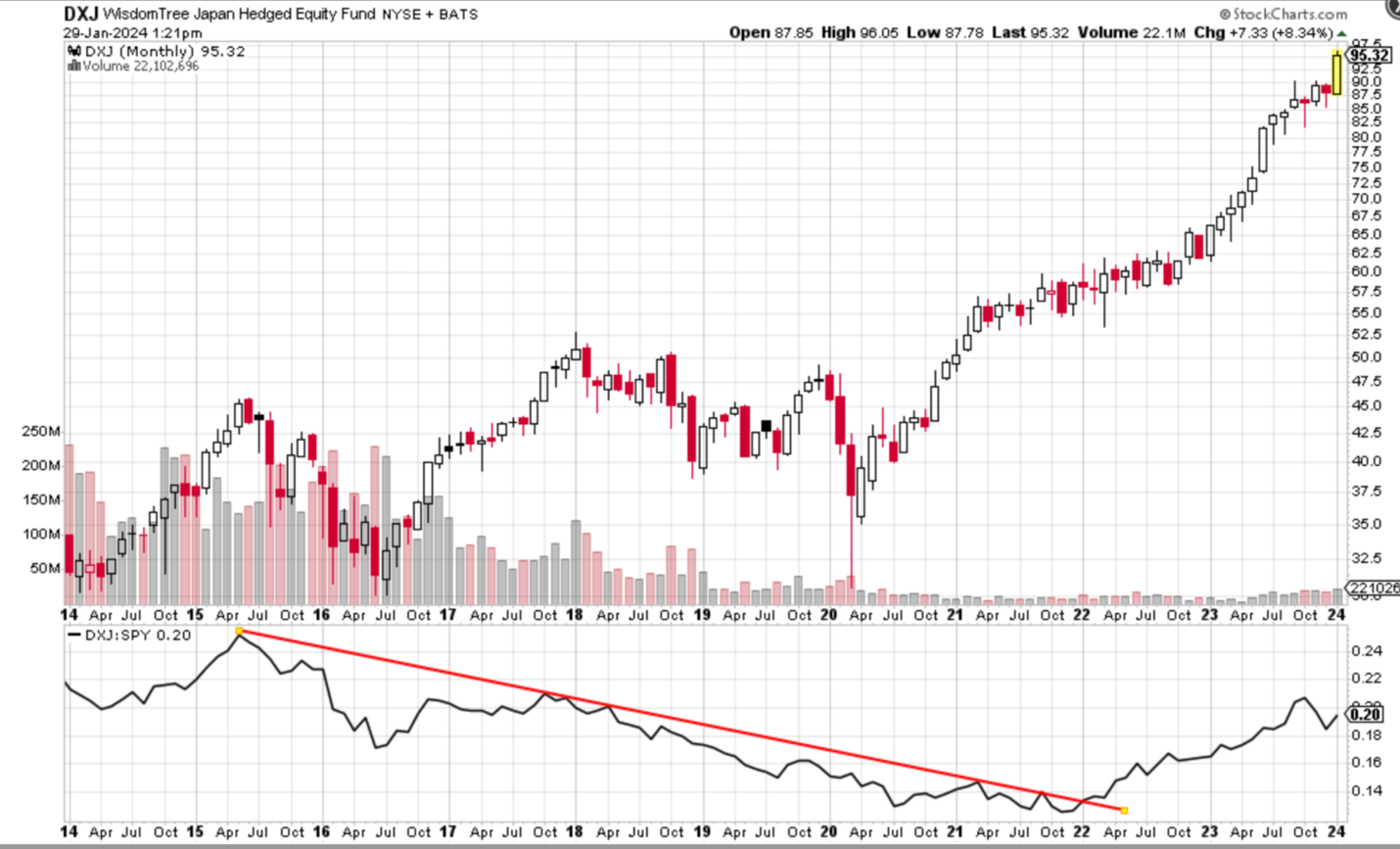
I once read that diversification means always having to say you’re sorry. By owning many different investments with presumed low correlation with the movement of another, you can compliment your portfolio with lower volatility and even higher return. This has been hard in the 21st century as the economies of the world have become more united. Stock markets around the world have moved more in lock step and many performed much worse than the U.S. market. As a U.S. based investor you’re likely to have a home market bias for many reasons, one of which is it is just easier. U.S. stocks have really led, particularly large companies. Recently however, Japan has hit a new all time high, the major peak? 1989! Below is a fund that buys stocks in Japan and hedges out the currency exposure. |
Courtesy of StockCharts.com |
The above is a monthly chart with the relative strength to the S&P etf at the bottom. When the downtrend broke, DXJ has been a real winner. It was even up 5.93% in 2022 when the U.S. suffered a bear market. While it is still trading at new highs and the relative strength trend is strong, it has been going on for a while, let us have another look! |
|
|
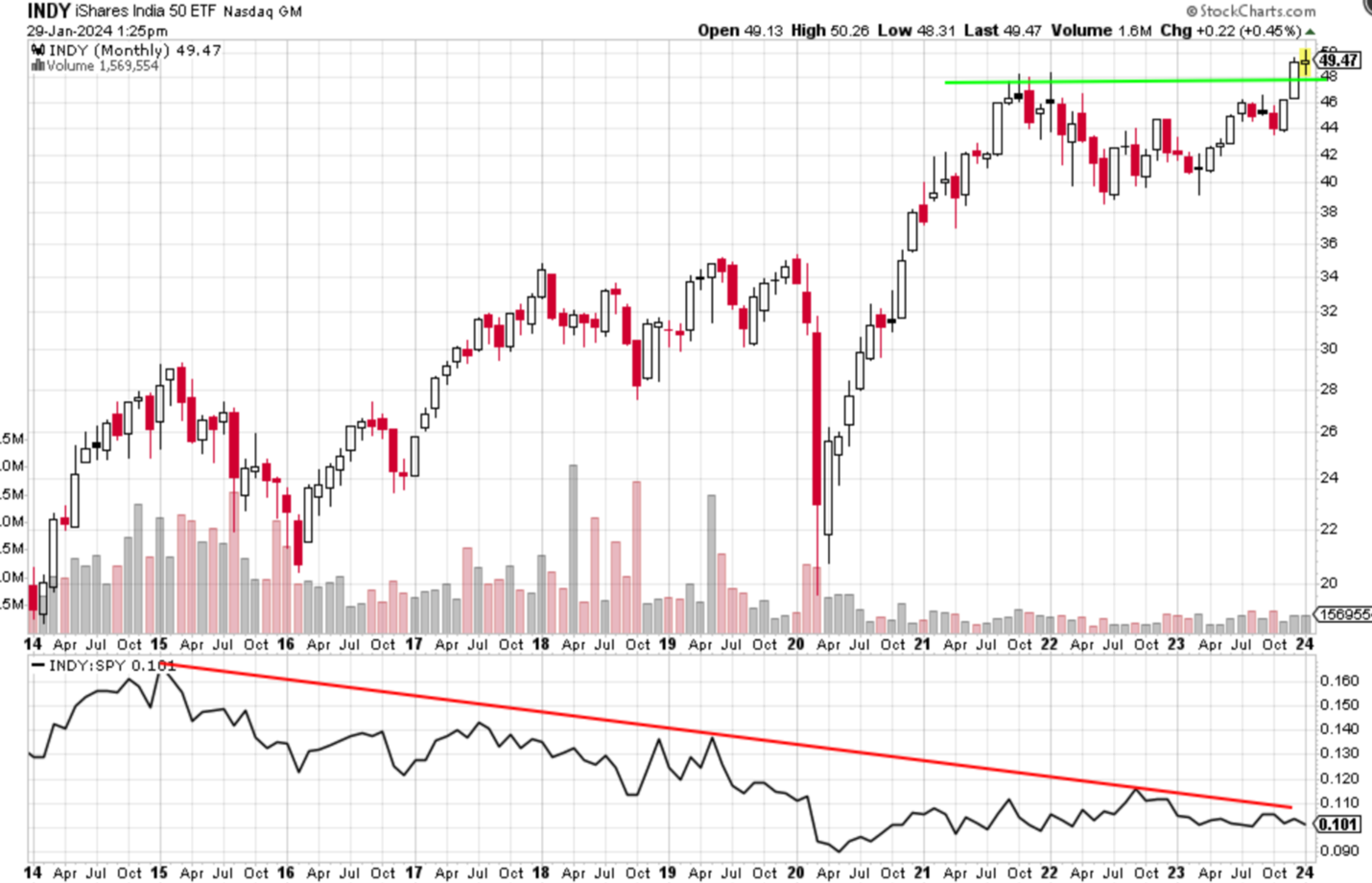
From the perspective of fundamental analysis, it was long expected that the emerging markets were going to see unprecedented economic growth as well as the valuation of their stock markets were quite a bit less than that of more developed markets. One good example of this is India. |
Courtesy of StockCharts.com |
There are some times in which you would have made money buying INDY and it is breaking out to new highs after stalling for a few months. It may be worth keeping an eye on the relative strength for potential longer term trends. As a matter of diversification, portfoliovizualizer.com estimates over the last 3 years INDY is about .58 correlated to the S&P 500. |
|
|
Something a Little Different. BONDS! |
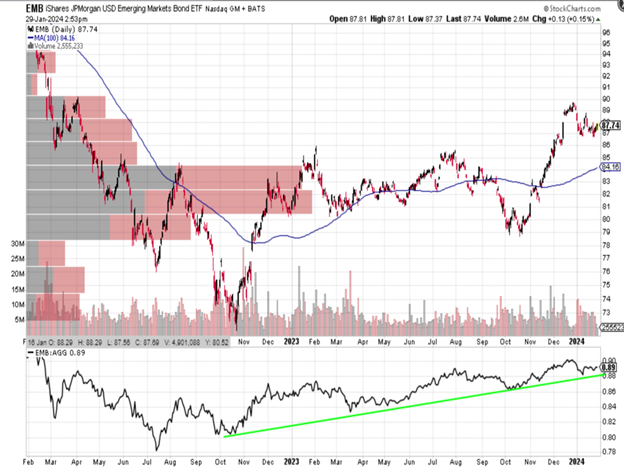
Let us take a look at another foreign asset. Emerging Market bonds. While each country tends to have their own central bank, there is still a large reliance on the movement of the Treasury bond market of the U.S. EMB is a fund that invests in emerging market bonds and has a yield around 4.5%. If we run a relative strength indicator on the Barclay’s Aggregate bond index ETF, we see some outperformance. For bonds, they tend to trend much slower and be less volatile. So let us include a 100-day moving average. |
Courtesy of StockCharts.com |
|
|
A Trend System for Emerging Market Bonds |
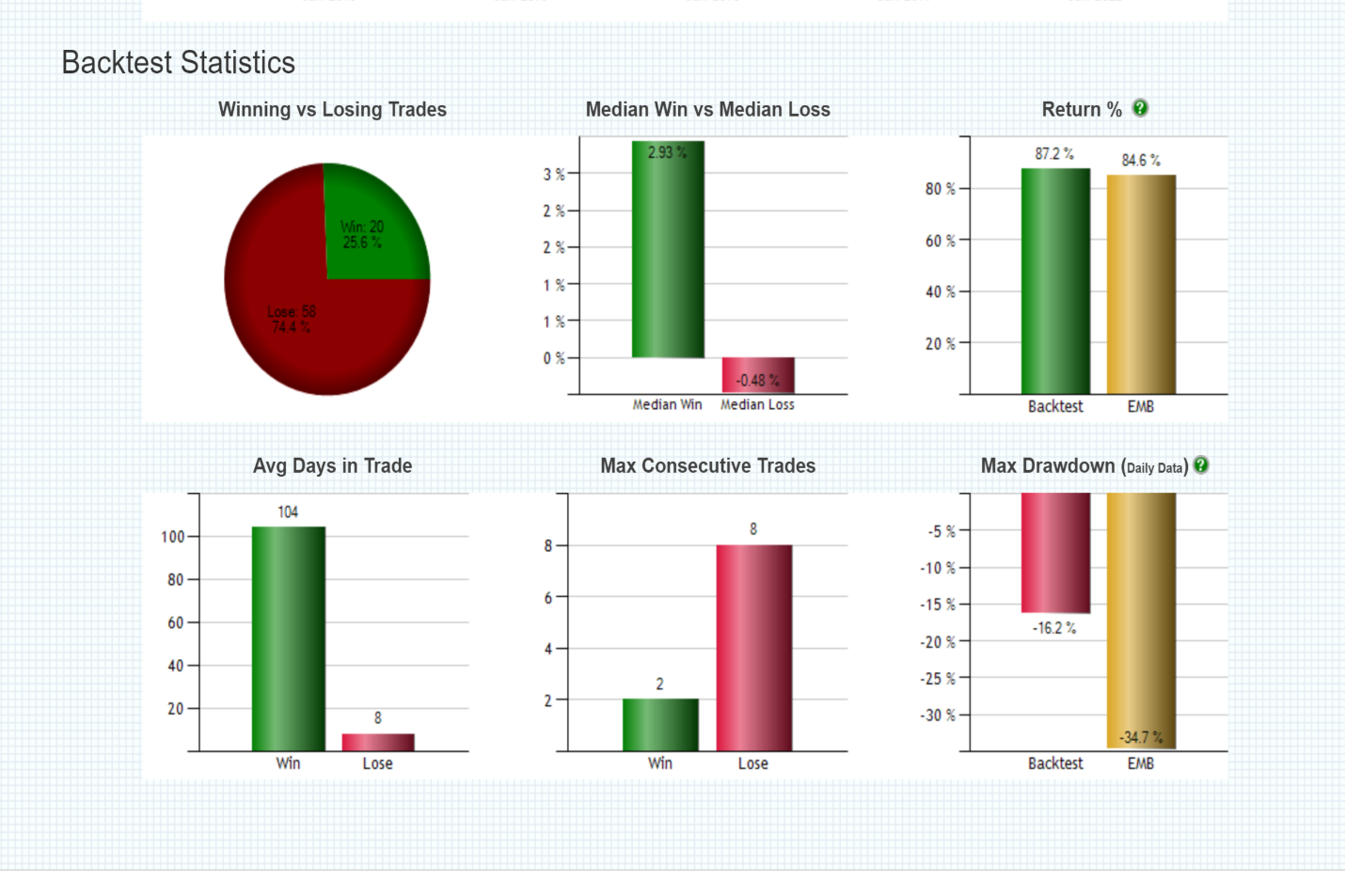
Technical Analysis can be used on anything with a price. This can be helpful if you wish to apply these principles to your retirement account for instance. Using a program at etfreplay.com, let us quickly test a trading system where you buy above the 100-day moving average and sell below it. |
During this testing period, the returns were slightly higher and the drawdown was less. Also note, that there are a lot of trades you take a loss. The median loss however is 0.48% and the median gain is almost 3%. This lookback is only to 2007 when the fund came out. It is a small sample size and it is often said your biggest drawdown is probably ahead of you. I simply wanted to illustrate a way of thinking about trend following as well as the idea that it works because it limits losses and lets the winners run. It can be hard to take many small losses in a row, but the more you see it in action the more confidence you can get in your system. |
|
|
Ryan Gorman, CFA, CMT, BFA is a Chartered Financial Analyst (CFA) and Chartered Market Technician (CMT) dual chartered holder. In addition, he holds the Behavioral Financial Advisor designation, he is fascinated by the impact of human behavior on their financial planning as well as on markets. Ryan serves as a Financial Advisor and Chief Investment Officer focusing on the management of portfolios for retail clients. |
|
|
You are receiving this newsletter because you subscribed to the Chart Advisor newsletter. If you wish to unsubscribe, please click here. Dotdash Meredith 225 Liberty St, 4th Floor, New York, NY 10281
© 2024 All Rights Reserved. Privacy Policy | Terms of Service |
|
|
|