|
||||
|
Are you running out of content ideas?
Want your product seen by over 75,000 founders and businesses? Sponsor an issue of the Indie Hackers newsletter. Choose between 3 affordable tiers that can fit almost any budget. Creating Engaging, Interactive Content 🤩
These insights and strategies can help you captivate your audience through content that invites them to participate, interact, and connect with your brand! Know your audienceUnderstanding your audience is the foundation of creating content that resonates. For that, you need to conduct thorough research to identify your target demographic, their preferences, and the platforms they frequently use. Storytelling with a purposeStorytelling is not just about conveying a message; it's also about creating an emotional connection. So, try to craft narratives that evoke feelings, spark curiosity, or tap into shared experiences. The more relatable and emotionally resonant your story, the more likely it is to draw your audience in and encourage interaction. Incorporate multimediaDiversify your content by incorporating various elements, including videos, infographics, and animations. Experiment with different formats to see what resonates best with your target audience. Gamification strategiesIntroduce gamification elements into your content to tap into people's love of competition and achievement. Whether it's quizzes, polls, or interactive challenges, gamification not only makes your content more enjoyable, but also encourages participation. As part of the game, consider offering rewards or incentives! Livestreaming and webinarsLeverage real-time engagement through livestreaming and webinars. Live events create a sense of urgency, encouraging more active participation. User-generated content campaignsHarness the power of your community by incorporating user-generated content (UGC) into your strategy. Encourage your audience to share their experiences with your brand through photos, videos, or testimonials. Be sure to incorporate a branded hashtag. Interactive email campaignsEmail marketing is powerful. Transform your efforts by making emails more interactive, incorporating clickable elements, interactive images, and personalized content tailored to each recipient. VR and ARFor a full immersive experience, consider incorporating virtual or augmented reality into your content strategy. While this is more resource-intensive, it can provide a memorable, shareable experience for your audience. VR and AR are especially effective for industries like real estate, travel, and retail! Discuss this story. Your Go-to for Technical Documentation 📄 This issue is sponsored by GitBook GitBook combines powerful docs with AI-powered search and insights to give technical teams a single source of truth for their knowledge. Effortlessly create, surface, and improve documentation in the tools you use daily - such as Slack, GitHub, and VS Code. Demystifying Cold Calls 📞
by Mac Martine When I first started reaching out to people to pick their brains about their business processes and pain points, I was scared of rejection. I was also scared of bothering people. Combatting the fearAt first, I planned out my questions and tried to follow a formula. Over time, I realized that most people are cool, and love talking about themselves! If someone doesn't want to talk to you, they simply won't respond, or will say so (usually politely). So, by the time you get to an actual conversation, the person is willing. Therefore, there's no need to be nervous or worried! Let the conversation guide youMy most valuable conversations have been those where I can stay calm and relaxed, and let their responses guide me to the pain point I am trying to uncover. Trying to follow a prescribed set of questions is much less productive. Go with the flow, and encourage them to go deeper. The deeper they go, the more pain and value you will extract. After just a few times of reaching out to people and having these conversations, I was super comfortable with it. It became something I didn't have to think much about. I attribute my success to going through this process, as it has been the big difference in how I approached my apps that have done well versus those that haven’t. Get inside their headsThere's no better way to get inside the head of your customer than to have insightful conversations, no matter what stage you're in. Hopefully, this encourages you to face any fears you have around starting conversations with prospects or customers, and to recognize the value you are bound to walk away with if you do so! Discuss this story. In the News 📰
from the Growth Trends newsletter 🛠 WhatsApp announces new tools for Channels. 🔎 Insights into B2B marketing trends. 💲 Link to your product here. Our most affordable ad. 🤗 Here's how to repair a damaged business partnership. 🛣 Paths to product-market fit. 🗑 A shocking amount of the internet is already AI-generated garbage. Check out Growth Trends for more curated news items focused on user acquisition and new product ideas. Yossi Segev Rediscovered His Love for Building 💞
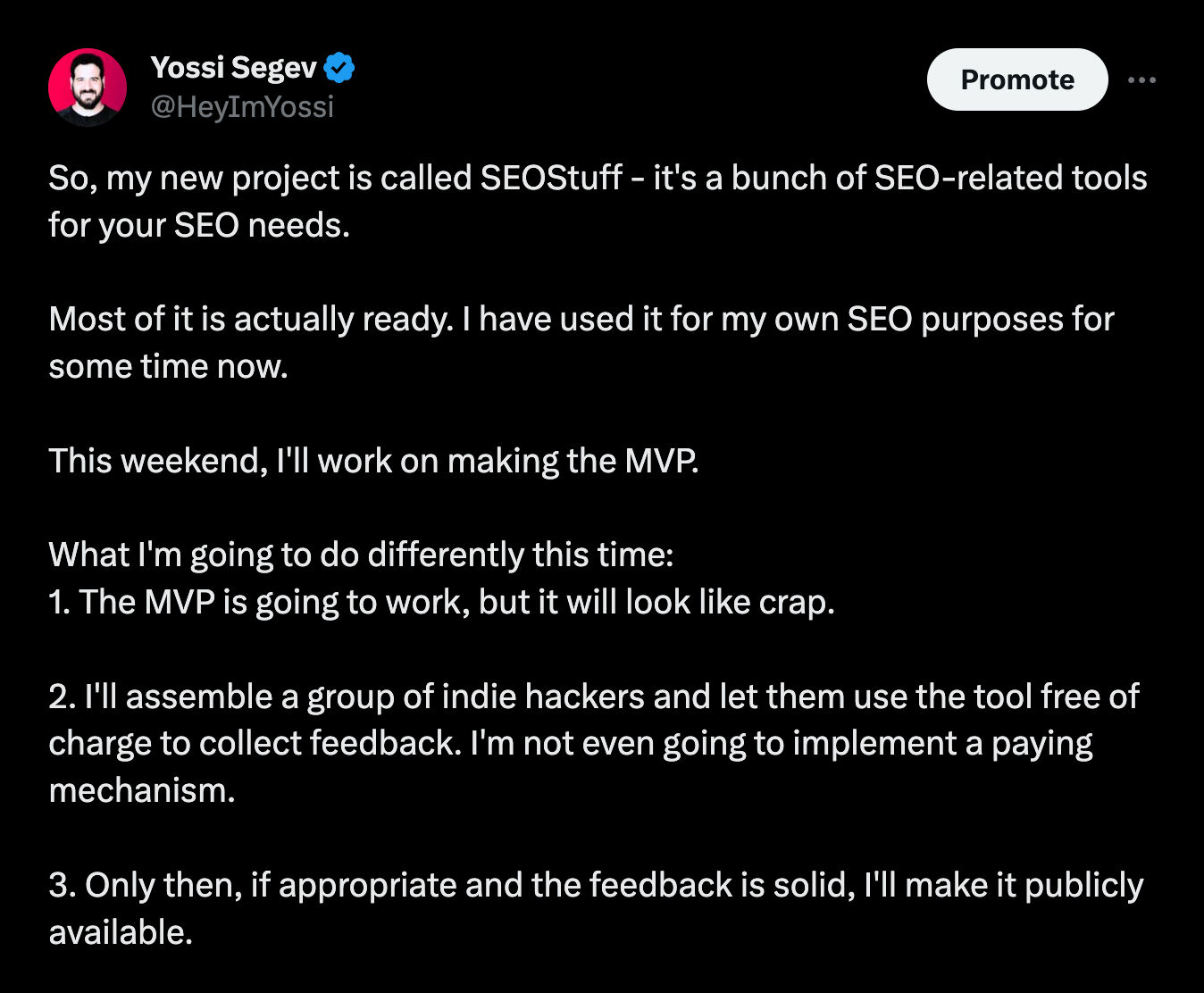
by Yossi Segev Last time I posted, I told you about my latest failed project. It was a frustrating post about how, after months of development, I couldn't land a single paying user. It was a humbling experience, and when I decided to shut down that last project, I almost gave up on indie hacking entirely. At that point, I had spent the whole year launching four failed projects in a row. The turnaroundIn December 2023, I launched SEO Stuff. As I write this, SEO Stuff is 45 days old, and has generated $1.1K+. Here's how I came up with the idea: SEO tools are expensive! I imagined a great keyword research tool, minus the expensive monthly subscription. My users buy credits as a one-time payment, and if they run out of credits, they can always buy more. ValidationI decided I was not going to write a single line of code at the start. Instead, I tweeted this: This initial tweet helped me gather over 30 beta testers, so I got started on the MVP. Before getting to work, I set the following ground rules:
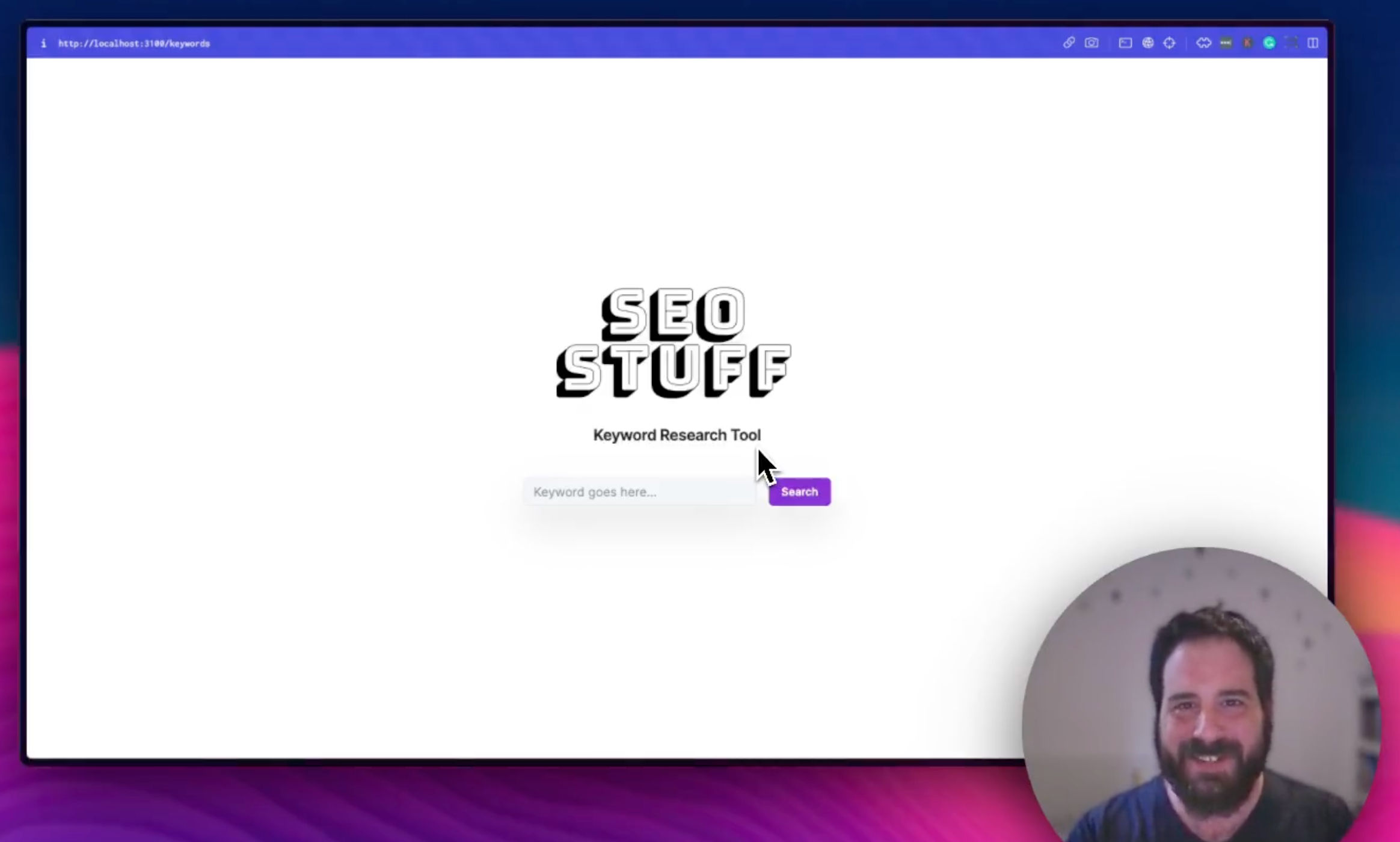
After few days, I had a working MVP. This is what it looked like when I gave it to the testers: Beta feedbackOnce my testers got their hands on the MVP, I began asking for feedback. I got amazing input and ideas, and I really felt I was designing the product with my users. I had a great time, and for the first time in almost a year, I actually enjoyed building! Some testers even asked to pay ahead of time. Doubling down on developmentThe next step was to implement the payment infrastructure, and open access publicly. I launched the new version on December 4, and made $110 on the first day. I was so excited! SEO Stuff currently has 95 paying users, and here it is 45 days later: Don't give up. Keep shipping! Discuss this story. The Tweetmaster's Pick 🐦
Enjoy This Newsletter? 🏁Forward it to a friend, and let them know they can subscribe here. Also, you can submit a section for us to include in a future newsletter. Special thanks to Jay Avery for editing this issue, to Gabriella Federico for the illustrations, and to Thomas Griffin, Darko, Mac Martine, and Yossi Segev for contributing posts. —Channing |
||||
|