
|
|
PRESENTED BY
|

|
|
Here's what you'll find in this issue: - **This founder bought Chess․com for $56k** to build a community. Now it brings in nearly $200M a year. - **5 vibe coding tools.** Some of the latest apps for coding with AI. - **Yesterday's build board winners
Here's what you'll find in this issue:
-
This founder bought Chess․com for $56k to build a community. Now it brings in nearly $200M a year.
-
5 vibe coding tools. Some of the latest apps for coding with AI.
-
Yesterday's build board winners, including three new product launches from indie hackers.
-
30-second growth tip: Give your longest free users a trial of your paid tier.
Forum Ventures invests $100K in your MVP, then helps you scale from zero to one. Forum is your first believer before you have any traction. You don't just get a check. You get a business partner that works with you 1:1, handholds your GTM, and introduces you to investors.
This Founder Bought Chess․com and Grew to Millions ♟️

Erik Allebest bought Chess․com for $56k in 2005 after discovering it cost him about $3 in ads to bring in each potential customer for a $3 chess set. He saw a bigger opportunity: build an online home for chess players, because playing online at the time felt miserable.
Twenty-one years later, Chess․com has nearly 300M registered members and is on track for almost $200M in annual revenue.
Erik could have chased a quick exit, but instead he spent years compounding product quality, content, and community. His patience paid off. The combined forces of the pandemic, a Netflix hit (The Queen’s Gambit), and PogChamps (Chess․com’s Twitch-friendly celebrity tournament) brought chess into the mainstream all at once. Chess․com was ready because it had spent decades serving the people who already cared.
This is an interview you don't want to miss. Erik gets into why community came before monetization, how a low-single-digit paid conversion rate can support a huge freemium business, and what it takes to serve 10M daily users. Plus lots more.
Read the full article →
Scale should make web data cheaper. Not pricier. 🧑🏻💻

More requests shouldn’t mean proportionally more infrastructure, vendors, and surprise fees.
Context.dev is built so teams can scale web-data workloads behind one API instead of scaling the scraping stack around them.
Browser rendering comes standard. Stealth and proxy escalation are built in when needed. Clean Markdown, JSON, screenshots, and structured data come back through the same API. And pricing stays predictable: 1 credit = 1 successful scrape, with no rendering surcharge or stealth multiplier.
The goal is simple: as usage grows, the web-data layer should become easier to operate…not more expensive and complicated.
Scale with Context.dev.
Vibe coding tools to try 🧑🏻💻
-
Hatch: Ditch ChatGPT. Use the most productive AI assistant ever made. Thoughtfully crafted by the founders of Indie Hackers.
-
Augment Code: Context-aware AI agent that navigates huge repos and writes fixes like a senior dev.
-
Continue: Create custom AI copilots in VS Code or JetBrains with one open-source plugin.
-
Amazon Q Developer: Build and refactor AWS apps faster with AI that understands your stack.
-
Cline: Plan, act, and execute tasks inside VS Code with an open-source dual-mode agent.
See all 30 tools in the directory →
The Build Board 🪧
Every day, indie hackers post updates about the products they're building. Here's what the community voted to the top yesterday!
Enjoy building in public? Post an update to your product page on Indie Hackers, and it will automatically be added to the daily leaderboard.
Bite-sized growth tip 🍪

Give your longest free users a trial of your paid tier.
Scott Keyes built Going, a newsletter that sends flight deals. When he and co-founder Brian Kidwell looked at paid conversions, they found a stubborn group: people who had been on the free tier for more than two months. Almost none of them were upgrading.
So Brian gave those fence-sitters a free month of premium. They got to see the extra deals and features before deciding whether to pay. That one campaign brought in more than $50,000 in new revenue. Going now makes $300,000 a month.
If your long-time free users are stuck, the issue may not be that they do not want the paid tier. They may just need a chance to try it.
Read the full growth report →
AI assistants are evolving. Hatch is the next generation. 🧠
AI models have evolved. ChatGPT has not.
We're still using the same old AI assistant products we were using in 2022, even though the models underneath them keep getting better.
It's time for the next generation of AI assistants.
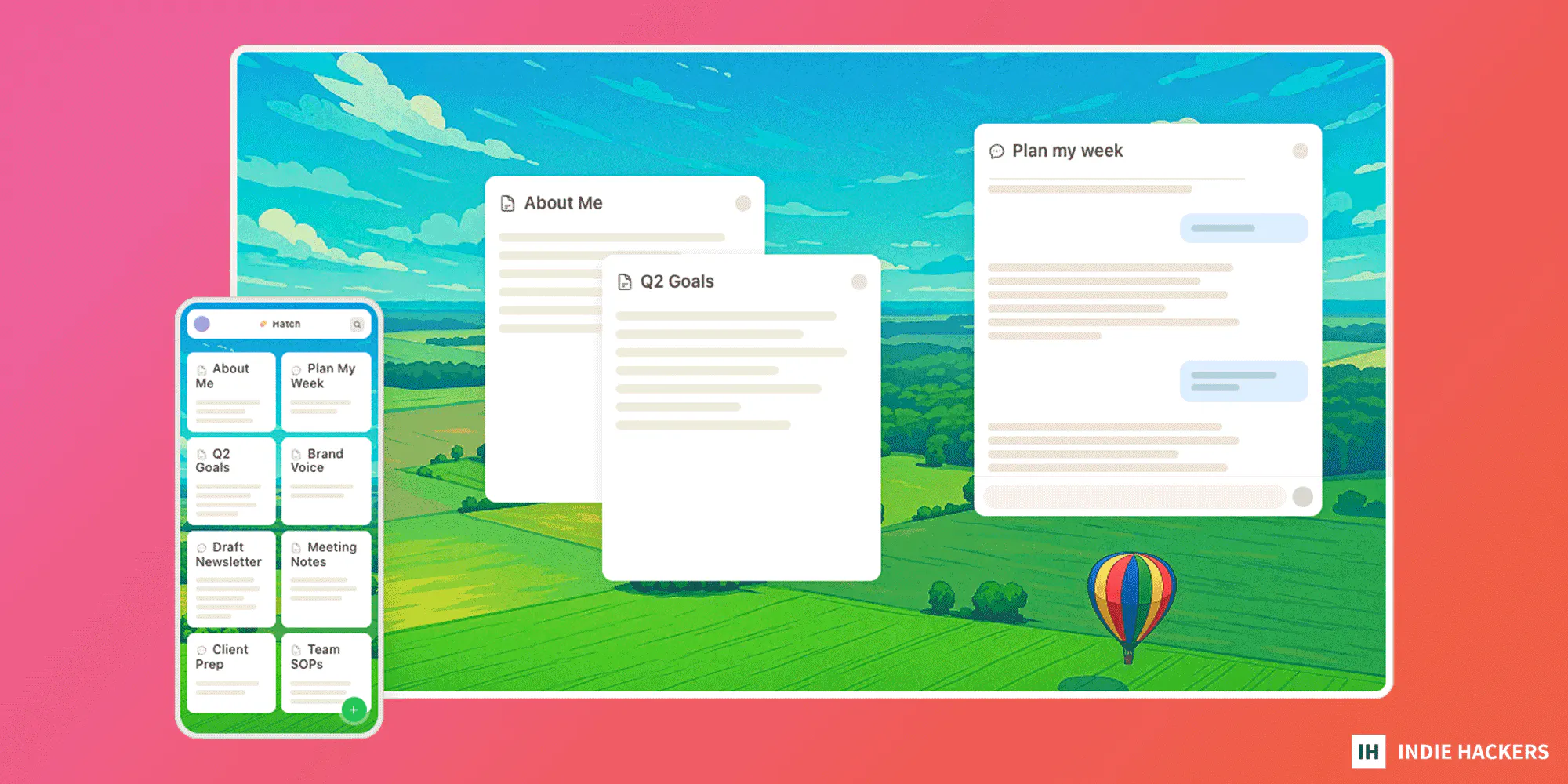
Introducing Hatch, the most productive AI assistant ever made.
From the creators of Indie Hackers, Hatch was thoughtfully crafted to help you get real work done. From floating windows to tagging documents, we've reimagined every aspect of your daily AI assistant to help you operate at a higher level.
Try Hatch free. Use code INDIE30FREE for 100% off for 1 month.
Channing's Tweet Pick 🐦

We'd love your feedback! 🙃
Did you like today's stories? Did they suck? Which ones?
We're constantly changing things up to make this newsletter more useful, so let us know what you think by replying directly to this email. We read every reply!
Special thanks to Yushavel Calderon for the graphic design, and to James Fleischmann for contributing a post.
—Channing
|
|
|
Indie Hackers | 522 W Riverside Ave #6526, Spokane, WA, 99201
|
|
You're subscribed to the Indie Hackers Newsletter. Click here to unsubscribe.
|
|
|


