Also: 5 vibe coding tools  ͏ ͏ ͏ ͏ ͏ ͏ ͏ ͏ ͏ ͏ ͏ ͏ ͏ ͏ ͏ ͏ ͏ ͏ ͏ ͏ ͏ ͏ ͏ ͏ ͏ ͏ ͏ ͏ ͏ ͏ ͏ ͏ ͏ ͏ ͏ ͏ ͏ ͏ ͏ ͏ ͏ ͏ ͏ ͏ ͏ ͏ ͏ ͏ ͏ ͏ ͏ ͏ ͏ ͏ ͏ ͏ ͏ ͏ ͏ ͏ ͏ ͏ ͏ ͏ ͏ ͏ ͏ ͏ ͏ ͏ ͏ ͏ ͏ ͏ ͏ ͏ ͏ ͏ ͏ ͏ ͏ ͏ ͏ ͏ ͏ ͏ ͏ ͏ ͏ ͏ ͏ ͏ ͏ ͏ ͏ ͏ ͏ ͏ ͏ ͏ ͏ ͏ ͏ ͏ ͏ ͏ ͏ ͏ ͏ ͏ ͏ ͏ ͏ ͏ ͏ ͏ ͏ ͏ ͏ ͏ ͏ ͏ ͏ ͏ ͏ ͏ ͏ ͏ ͏ ͏ ͏ ͏ ͏ ͏ ͏ ͏ ͏ ͏ ͏ ͏ ͏ ͏ ͏ ͏ ͏ ͏ ͏ ͏ ͏ ͏­­­­­­­­­­­­­­­­­­­­­­­­­­­­­­­­­­­­­­­­
Indie Hackers

PRESENTED BY

Advertiser
Here's what you'll find in this issue: - **This founder kept** his day job while building a newsletter tool. His patience helped him grow it to $1M ARR. - **5 vibe coding tools.** Some of the latest apps for coding with AI. - **Yesterday's build boar

Here's what you'll find in this issue:

  • This founder kept his day job while building a newsletter tool. His patience helped him grow it to $1M ARR.
  • 5 vibe coding tools. Some of the latest apps for coding with AI.
  • Yesterday's build board winners, including three new product launches from indie hackers.
  • 30-second growth tip: Let enterprise customers qualify themselves (instead of doing sales calls).

Scale web data without scaling the bill. Context.dev puts browser rendering, stealth, proxy escalation, and structured outputs behind one API. 1 credit = 1 successful scrape—no rendering surcharge or stealth multiplier. Scale cheaper with Context.dev.

This Founder Kept His Day Job and Built a $1M Newsletter Tool ⏳

Justin Duke built Buttondown on nights and weekends while working at Stripe. The established newsletter tools felt bloated and hostile to writers, so he made a simple, markdown-first alternative instead. His day job gave him the runway to make patient decisions. Buttondown now brings in more than $1M ARR.

How do you convince writers to leave billion-dollar email platforms for a tiny upstart? Justin bet on a simpler product, unusually good support, and the patience to let word of mouth and SEO compound.

In the full interview, he explains how he used his day job to avoid chasing every opportunity, raised prices without losing his footing, and turned support into a growth channel. Read it for the playbook behind Buttondown's climb to $1M ARR.

Read the full article →

Everyone is going to scan your site. You should see it first. 👀

Every founder eventually meets the person who scans their website. It is a security team, an underwriter, or an investor, and you almost never see what they saw. You just see the result: a delayed deal, a longer questionnaire, a higher premium.

FreeDAST is the free way to look first.

Enter a URL. Get an external security grade in seconds. It is the same outside view an attacker, a buyer, or an underwriter sees of your public surface. No code access. Nothing to install. No signup wall between you and your score. It is the same kind of scan that shows up in cyber insurance renewals, SOC2 audits, investor diligence, and enterprise security reviews.

Current tools, and we have used most of them at TripleKey, build a risk profile about your company that you cannot easily correct, then paywall the details until you upgrade. That is backwards. Your own security posture should not be a lead magnet someone else owns.

Vibe coded a site over a weekend and shipped it? Run it. We have never scanned one without finding something worth fixing, usually a header, an exposed endpoint, or a certificate nobody thought about.

The grade takes seconds. Fixing what it finds takes an afternoon. Both beat the alternatives.

Run your scan at freedast.com.

If it is useful, tell us. If it is not, tell us that too. We are building the next version around what founders actually need.

Vibe coding tools to try 🧑🏻‍💻

  1. Hatch: The next-generation AI assistant for getting real work done.

  2. Amazon Q Developer: Build and refactor AWS apps faster with AI that understands your stack.

  3. Blackbox AI: One platform to orchestrate 300+ AI models for autonomous coding and parallel task execution.

  4. GitHub Copilot: Suggests code and entire functions in real-time within your editor.

  5. Fine: AI-powered rapid application development tech, now integrated as the core engine for HoneyBook.

See all 30 tools in the directory →

Bite-sized growth tip 🍪

Let enterprise customers qualify themselves instead of doing sales calls.

Michele and Mathias Hansen built Geocodio, a tool that turns addresses into coordinates. As a two-person bootstrapped team, they weren't about to spend their days on discovery calls and demos.

So they made the product completely self-serve. Bigger companies could sign up, test the API, and check the data quality themselves. By the time someone needed more volume, they already knew it worked and had a real reason to talk.

That filtered out the tire-kickers and let serious buyers do the qualifying for them. Maybe they left some money on the table, but Geocodio now makes $80,000 a month with two people.

Read the full growth report →

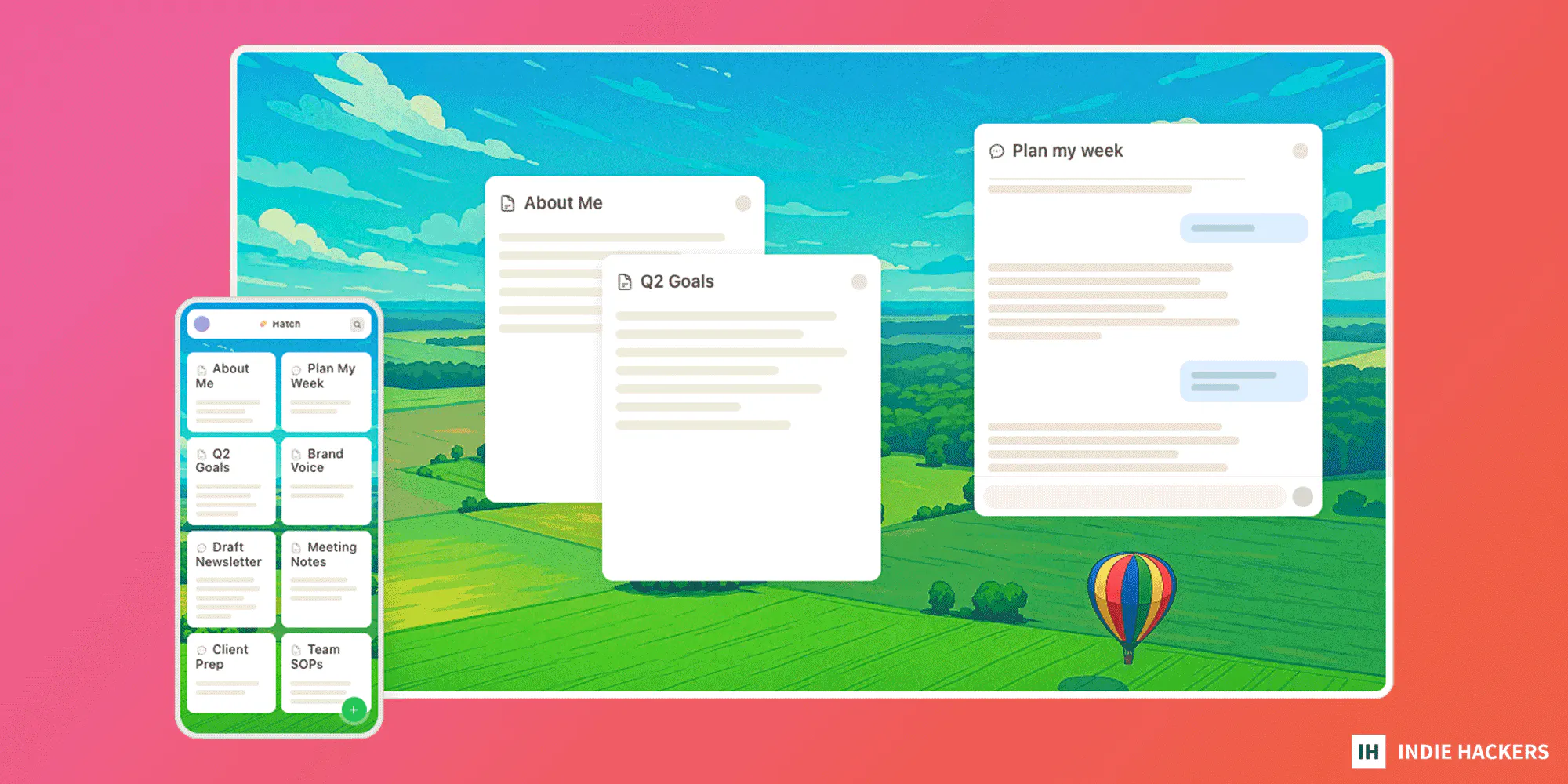
AI assistants are evolving. Hatch is the next generation. 🧠

AI models have evolved. ChatGPT has not.

We're still using the same old AI assistant products we were using in 2022, even though the models underneath them keep getting better.

It's time for the next generation of AI assistants.

Introducing Hatch, the most productive AI assistant ever made.

From the creators of Indie Hackers, Hatch was thoughtfully crafted to help you get real work done. From floating windows to tagging documents, we've reimagined every aspect of your daily AI assistant to help you operate at a higher level.

Try Hatch free. Use code INDIE30FREE for 100% off for 1 month.

Channing's Tweet Pick 🐦

Your energy and attention become liabilities instead of assets when you aim them at the wrong targets.

—Channing

We'd love your feedback! 🙃

Did you like today's stories? Did they suck? Which ones?

We're constantly changing things up to make this newsletter more useful, so let us know what you think by replying directly to this email. We read every reply!

Special thanks to Yushavel Calderon for the graphic design, and to James Fleischmann for contributing a post.

—Channing

​

Indie Hackers | 522 W Riverside Ave #6526, Spokane, WA, 99201 
You're subscribed to the Indie Hackers Newsletter. Click here to unsubscribe.