|
 |



My brain is already on vacation (especially after two months of Andreessen research and writing), and I suspect yours is, too. So I’m sending this a little early before logging off for the rest of the year.
This issue has an ask, my favorite things of 2023, and some thoughts on generosity and burnout.
“…it’s easy to feel useless, and from there it’s a short leap to despair. But I don’t believe we can afford to despair, nor do I think despair is ethical.” - British-Palestinian novelist Isabelle Hammad, in conversation with Irish novelist Sally Rooney about the role of artists in the face of the Israel’s ongoing, indiscriminate massacre of Palestinians.¹ Many of you, like me, are in the U.S. and while Congress has gone home for the holidays, you can still call and email and strike to demand that the U.S. supports a ceasefire.
🏡 Housekeeping
Think Piece will resume in January. If you can’t get enough of me, browse the Archive. I wish you a safe and resourced end of the year.
For our paid subscribers, it’s time to submit for the Brain Trust coaching and advice column! You can ask anything from the practical to the philosophical about business, life, the universe…I’m all yours. So far we’ve tackled whether online business is over and what happens when you’re sick of marketing (and maybe sick of business).
Read all the details and submit your question here.
🤝 The Ask
Not a paid subscriber yet? I know I know, you mean to but it’s easy to forget. Today is the day! Sneak this in as a business expense for 2023! Submit to Brain Trust to get personal feedback from yours truly! Help me help you!
Your paid subscription gets you full access to the archives and comments, the opportunity to ask me anything for the Brain Trust advice column, a private podcast feed with audio versions of essays, paid-only essays, and more. Paid subscriptions allow me pay my podcast editor and buy coffee, and they create a reciprocal exchange between my labor and your engagement with my work.
If you read Think Piece most weeks, if you listen to the podcast, or if you use my thoughts to help you think about your work or business, upgrade today.
🎁 Generosity Stems From Wellbeing
Talking to Khe Hy on The Think Piece Podcast last week, I was struck by his commitment to responding to emails from newsletter subscribers. Khe has over 45,000 people on his mailing list, and he shared in the episode that he will often record a quick Loom video to reply to reader emails.
I love this.
And I can’t imagine doing it.
In July 2020, I had my best business month ever. Strong MRR from my membership plus the largest enrollment cycle in my Launch Incubator group program pushed monthly revenue to the highest point my company reached.² I spent weeks talking with potential Incubator clients, responding to emails and DMs, and generally showing up and being available and being charismatic and being whatever was needed to help people decide whether or not they wanted to work with me.
I also had a breakdown. I spent hours each night during that launch on my porch in Asheville, staring into the dark, using a rosary to help me repeat a small prayer and try to quiet my mind. I had struggled with the role of my personality and necessity of my availability to secure clients, but this was the tipping point. When I saw a new direct message, or a new email, I would panic. My breathing would become shallow and my brain would immediately go to a worst-case scenario. Even the most innocuous comment would create an aversion that led me to ruminate for hours—or days—when a quick acknowledgment (or nothing) was all that was needed.
Despite three years of therapy and drastic changes to my business, I haven’t fully recovered.
But I want to.
The ability to be generous is a kind of wellbeing indicator. If you can give, whether that’s time or money or resources, it means you have something to give. And I am troubled that during my most successful years of business, I was least able to be generous with my time and my skills.
I was busy, sure. Trying to scale an online education start-up was demanding. But I have found that busyness isn’t the issue: I’m demonstrably not busy right now,³ and am still challenged by replying to emails.⁴ I still panic when I see a direct message, and I finally left Instagram because of this. And I feel so guilty that I am not able to be present in the way that my audience deserves.⁵
In this essay about existential burnout, writer Emma Gannon shares that before she experienced burnout, she wasn’t very busy: “I don’t actually work that much.” Same. At the height of HBA I was working maybe 30 hours per week. More during launches to be sure, or when onboarding team members, or any of the other acute situations that require longer hours. But…I didn’t really work that much. And in more recent years, I was working closer to 20 hours per week.
I first noticed this incongruous relationship during 2020. My capacity for work was actually diminished as a founder, counter to the traditional narrative that founders work harder because they are so motivated. I attributed my lowered capacity to my health issues or my mental health, believing that working more exacerbated them and I was naturally moderating my activities. I also placed it within an anti-hustle narrative, justifying my low output as a kind of radical act.
But as I learned during my sabbatical this year, my health issues remain the same with close to no work at all, suggesting that work was not the primary factor.⁶ And now that I’m in a transitional phase, trying to figure out what’s next with no current work projects outside this newsletter, I can see that lower work levels don’t support me at all. I need more activity, more stimulation. I am desperate for a challenge. I assumed that it was too much that pushed me to the brink in 2020 and has continued to hound me, but that wasn’t an accurate assessment.
Gannon writes:
Looking back, my obsession with OOOs [out-of-office messages] were also a warning sign also. This excessive extreme need to put fences all around me because I was crumbling and hadn’t worked out how to navigate my life as less of a people-pleaser. I put walls up via aggressive out-of-offices instead of looking more deeply at the problem. My inability to say no.
Reading this…yeah. My jaw fell to the floor. I came to Jesus. I did whatever other figurative phrase you like for moments of intense clarity and confrontation with the self.
This was me. Always with an autoresponder ready to go and very clear communication guidelines. It wasn’t that I had too much work or that people were asking too much of me or anything like that at all.
I had no idea how to say no.
I was and remain somewhat terrified that saying no will lead to everyone hating me and me ending up dead in a ditch. I expend huge amounts of time debating whether or not I can say no, or figuring out how to say no, asking friends if I’m allowed to say no, or deciding how to reply in a way that feels respectful of my time without the person getting mad at me. I turn those fences into walls, and reinforce them by tying an existential dread to any interaction that approaches them. I bleed energy through anxiety, projecting my fears onto others and trying to control outcomes that I cannot.
Boundaries are good. But they can metastasize into an outsized defense mechanism and go on the attack, growing until there are no spaces through which energy can exchange with the outside world. Like the adage says, when all you have is a hammer, everything looks like a nail. The issue may not be that you need better defensive boundaries: you may just need to say no.
In my conversation with Khe, he offered “aliveness” as a north star for people seeking meaning outside of traditional achievement. I’m holding onto that one, but am going to add “generosity.” If I can be generous, then I’ll know that I am leading with aliveness. If I can say no, then I’ll be able to say yes. If I’m willing to let you be responsible for your feelings, then I can just be responsible for mine, and stop trying to anticipate every possible outcome every time I do anything. This is tricky, yes, when our incomes depend on people knowing, liking, and trusting us. But the key to longevity in any business comes from finding the balance between your needs, the needs of the business, and the need of your customers. And as I’ve learned, that balance won’t be found from a defensive posture.
In 2024, I want to be able to be generous. I want to receive messages and emails with the most generous interpretation.⁷ I want to share generously.⁸ I want to trust that I can do that without ignoring my own needs or blasting through my own boundaries. I’m not sure if I’ll get there, but I’m going to try.
If I’m able to do that, I’ll know that I’ve been able to heal.
🏆 My Favorite Things of 2023
I read a lot, thought a lot, ate a lot, and did some fun stuff this year in the midst of immense change and personal challenge. So for you, dear reader, a non-exhaustive list of what I actually enjoyed in 2023. Some of these are affiliate links and if you buy something I may get some money or credit thx.
Favorite Software: Airtable. As my business morphs into something more custom and less scaled, I am shedding softwares. HBA was highly automated and very impressive in its software structure tbh, but consulting and coaching requires much less in terms of structure. The one thing I refuse to give up? Airtable. I just fucking love it. I’ve used it to organize clients, article pitches, even my failed attempt to buy an apartment this year. The linked fields and filters create so much possibility. When paired with Zapier, you can do almost anything with data across your entire business! I use it every day. Love you so much.
Favorite Genre: Dystopian Business Fiction. An outgrowth of business thrillers and cyberpunk, this year I discovered what I can only call dystopian business fiction. In 2023 we were blessed with Flux by Jinwoo Chong and Natural Beauty by Ling Ling Huang. Both books explore the impacts of the immigrant experience and class on opportunity in America, and both take those themes into speculative territory with wildly fun and disturbing visions of corporate excesses. Flux is one of my favorite books of the year; the reading experience was perfect for the story and I look forward to reading it again. Natural Beauty goes a bit off the rails imo—I kept wishing for a touch more plot restraint—but is a swift and engaging read, especially if you have served any time in retail or any so-called glamour industry. Either would make a great vacation read.
Favorite Essay(s): “A Moral Education” by Garth Greenwell and “Vegetation” by Evan Grillon. A tie here, the only standard being that I am still thinking about these two essays more than anything else I read in a year when I read more essays and articles and journalism than books. It does not escape me that neither of these have to do with business. In “A Moral Education,” Garth Greenwell uses Sabbath’s Theater by Philip Roth as a way to explore the role of morality in fiction. Greenwell is generous but firm in the face of internet moralizing, writing that “passing judgment is a radically impoverished form of knowledge.” Founders often wrestle with ethics, especially in times of crisis, and I find myself repeatedly drawn to this essay as a way to navigate my own understanding of my moral responsibility.
Grillon’s “Vegetation” is also about life, and the tenuous nature of it. In a virtuosic essay, Grillon takes us through the experience of being diagnosed with endocarditis, getting heart surgery, and living with a mechanical valve. It’s beautiful. I don’t want to try to describe it. Just read it.
Favorite Book: Open Throat by Henry Hoke. I don’t really know what to say here. You should read it. Hoke manages to make something so odd and so compelling and make you laugh and cry and also it’s from the POV of a mountain lion? I saw Hoke read from Open Throat at the Center for Fiction this summer, and his performance hooked me fully. I’m a fan. I loved this book. It’s fast and fantastical and just a beautiful example of experimental fiction that you actually want to read.
Favorite Coffee: Kafana NYC. Yes, I am still thinking about the perfect espresso I had at Kafana in the East Village months ago. I need to get back there. The espresso is bitter yet smooth; too often the bitterness comes from extraction rather than the beans and roasting itself. The acidity was also not too high, a common issue in NYC coffee.⁹ The food is also amazing (the friesssss don’t skip them and get some of the soft cheese too and any meat you desire you will not regret), but that coffee…fuck. Honorable mention to literally every petit café I had in Paris because they are cheap and better than basically anything in New York still which is an embarrassment.
Favorite Food: Esu Lee at Mokoloco. I had a lot of great food in Paris. Everything from the still amazing 1€ baguettes to beautiful, multi-hour tasting menus paired with tea. But the thing I still crave? Esu Lee’s food! I was lucky to attend the last day of Lee’s residency at Mokoloco in Paris this fall, and it was a treat. Lee’s food blends impeccable French technique with his interpretations of Korean dishes. Lee’s food is vibrant and delicious and so fun. I ate his takes on kimbap, bibim, and a deep fried layered shrimp and white bread dish thing called Madame Butterfly that I’m still thinking about. Lee had his own restaurant in Paris that closed, and has been floating around since. If you’re heading that way, check out his Instagram to see if he’s guesting somewhere!
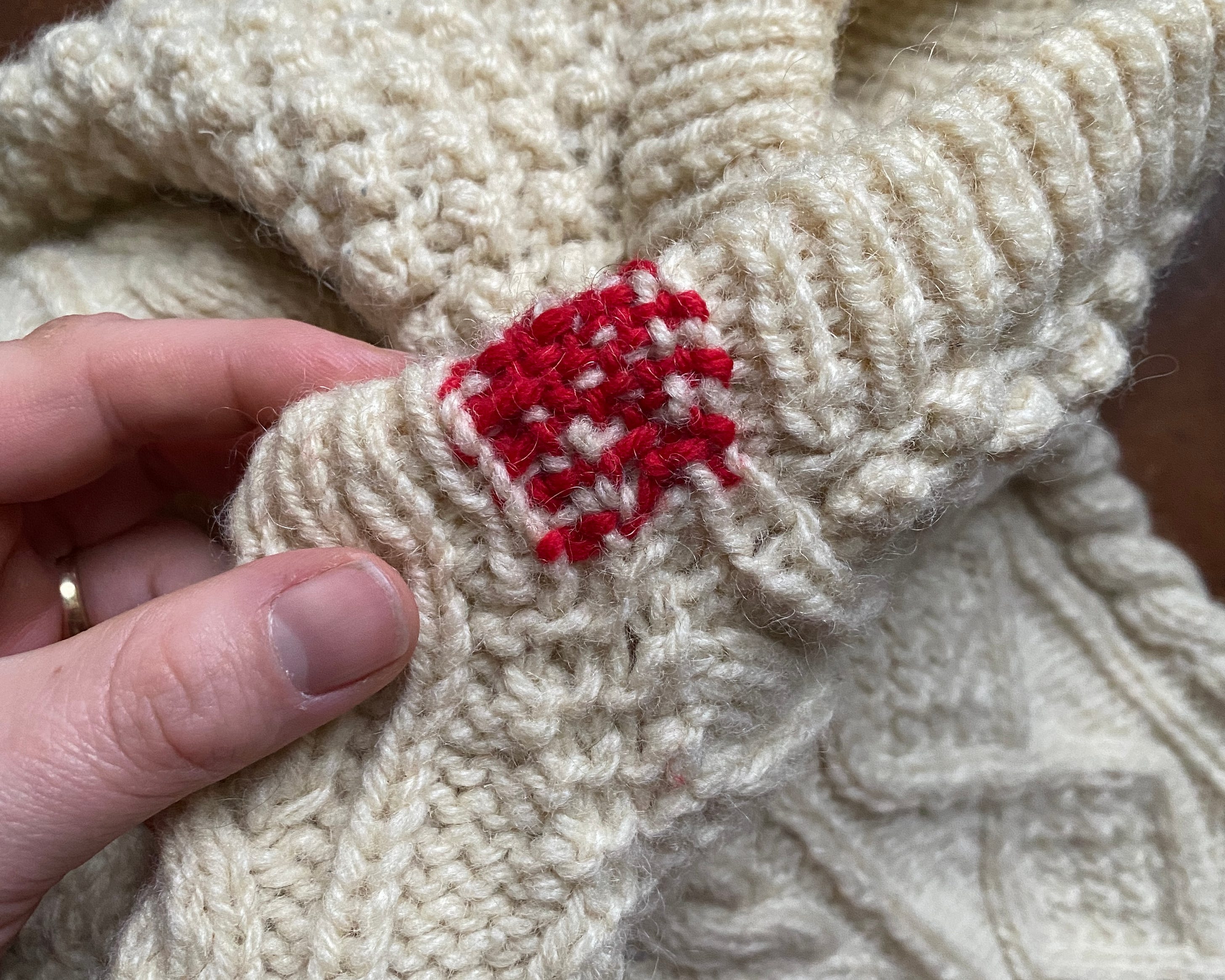
Favorite Thing I Learned: Darning. Darning is a method of fabric repair that grafts a weave over a hole in a garment. Darning is often used to repair the heels of socks, for example, or holes in sweaters. I took a class with Justine Nguyen that was organized by Subrina Heyink and now have repaired my much-loved vintage hand knit Irish fisherman’s sweater. I truly cannot encourage you enough to take classes in areas that have nothing to do with your work. The most successful founders I know are fantastic learners, and that is a skill you can develop at any age.
 |
And that’s it for this year. I’ll see you in 2024!
And Israelis: this week the IDF killed three Israeli men held hostage by Hamas while they were waving a white flag. And UN workers. And journalists.
My company was always slow and steady, with MRR compounding over time. Rarely did I have big spikes so even as revenue grew that month remained an outlier.
I’m actually quite bored. If you have an ambitious product, launch, or pivot to make in Q1 2024 I would love to talk about how I can support you through strategy or coaching. You can submit an inquiry here, and I’ll get back to you in January.
To be clear, my team and I have always responded promptly to customers. I take customer service very seriously and had a robust customer support system for my company.
Though Substack is helping; I love the thoughtful comments coming in and hope that more and more of you will use that feature! It has just a smidge of friction that I think helps us to pause and consider before we post, much like my private communities had. The context does make a difference!
I’m know overwork doesn’t help! But there is a lot of room between under and over working that I’m curious to explore.
which sometimes will be deleting them and never looking back. I get some weird shit.
That’s part of the Think Piece project. You can get access to my brain through my essays, the comments, and the Brain Trust column for $7/month, whereas before you had to be in a program that cost 10-100x that.
this is a major pet peeve of mine, all the fancy drip coffee in NYC is so acidic. It reminds me of great Rieslings that you really shouldn’t drink too young because you’ll lose your tooth enamel and frankly be committing murder on wines that will sing in decades but here it’s just shitty overpriced coffee that is under-roasted and brewed too hot and I will die on this hill. (n.b. I know nothing about coffee. I used to know a lot about wine.)...
Subscribe to Think Piece to read the rest.
Become a paying subscriber of Think Piece to get access to this post and other subscriber-only content.
A subscription gets you:
 | Subscriber-only posts, full archive, private podcast feed, and commenting privileges |
| Access to the Brain Trust advice column, on-demand workshops, and live events |
| Puts coffee in my cup and keeps my words on your screen |
| ||||||||||